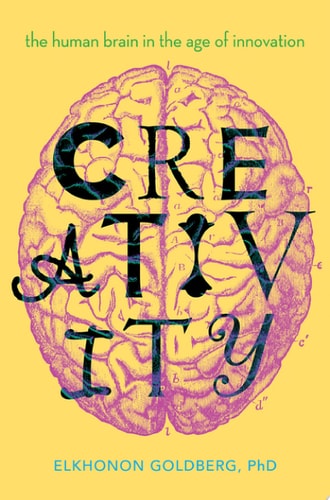
Creativity: The Human Brain in the Age of Innovation
0
0
As an Amazon Associate and affiliate partner, Menrva Books earns from qualifying purchases. Learn more
Author Description
What Is The Nature Of Human Creativity? What Are The Brain Processes Behind Its Mystique? What Are The Evolutionary Roots Of Creativity? How Does Culture Help Shape Individual Creativity? Creativity: The Human Brain In The Age Of Innovation By Elkhonon Goldberg Is Arguably The First Ever Book To Address These And Other Questions In A Way That Is Both Rigorous And Engaging, Demystifying Human Creativity For The General Public. The Synthesis Of Neuroscience And The Humanities Is A Unique Feature Of The Book, Making It Of Interest To An Unusually Broad Range Of Readership. Drawing On A Number Of Cutting-edge Discoveries From Brain Research As Well As On His Own Insights As A Neuroscientist And Neuropsychologist, Goldberg Integrates Them With A Wide-ranging Discussion Of History, Culture, And Evolution To Arrive At An Original, Compelling, And At Times Provocative Understanding Of The Nature Of Human Creativity. To Make His Argument, Goldberg Discusses The Origins Of Language, The Nature Of Several Neurological Disorders, Animal Cognition, Virtual Reality, And Even Artificial Intelligence. In The Process, He Takes The Reader To Different Times And Places, From Antiquity To The Future, And From Western Europe To South-east Asia. He Makes Bold Predictions About The Future Directions Of Creativity And Innovation In Society, Their Multiple Biological And Cultural Roots And Expressions, About How They Will Shape Society For Generations To Come, And Even How They Will Change The Ways The Human Brain Develops And Ages.
Menrva's Summary
THE THESIS
What are the biological and evolutionary mechanisms that underpin human creativity, and how do these processes interact with cultural development? Elkhonon Goldberg, a clinical professor of neurology and neuropsychologist, synthesizes contemporary neuroscientific data with historical and cultural analysis to propose a framework for understanding innovation. He argues that creativity is not a singular cognitive function but a complex result of brain architecture, evolutionary adaptation, and environmental influence.
THE SCOPE MAP
What You Will Find
- Analysis of the neurobiological foundations of creative thought
- Comparative studies of animal cognition and human innovation
- Examination of the intersection between artificial intelligence and human brain development
- Historical and cross-cultural perspectives on the evolution of creative expression
Scope Limits
- The text does not provide a practical self-help guide for increasing individual creative output
- It does not offer a comprehensive clinical manual for treating neurological disorders related to cognition
THE AUTHORITY PERSPECTIVE
Experts and readers frequently note the interdisciplinary nature of the prose, which bridges the gap between hard neuroscience and the humanities. The text is recognized for its ability to translate complex neurological concepts into a format accessible to a general audience while maintaining academic rigor.
Page Count:
288
Publication Date:
2018-01-01
Publisher:
Oxford University Press
ISBN-10:
0190466502
ISBN-13:
9780190466503
Psychology
Non-Fiction
Evolutionary Biology
Creativity
Neuroscience
Community Tags
Similar Books