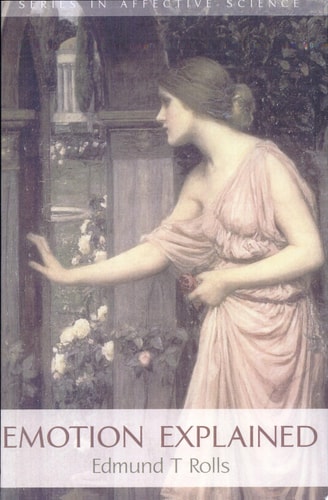
Emotion Explained
0
0
As an Amazon Associate and affiliate partner, Menrva Books earns from qualifying purchases. Learn more
Author Description
What produces emotions? Why do we have emotions? How do we have emotions? Why do emotional states feel like something? This book seeks explanations of emotion by considering these questions. Emotion continues to be a topic of enormous scientific interest. This new book, a successor to 'The Brain and Emotion', (OUP, 1998), describes the nature, functions, and brain mechanisms that underlie both emotion and motivation. 'Emotion Explained' goes beyond examining brain mechanisms of emotion, by proposing a theory of what emotions are, and an evolutionary, Darwinian, theory of the adaptive value of emotion. It also shows that there is a clear relationship between motivation and emotion. The book also examines how cognitive states can modulate emotions, and in turn, how emotions can influence cognitive states. It considers the role of sexual selection in the evolution of affective behaviour. It also examines emotion and decision making, with links to the burgeoning field of neuroeconomics. The book is also unique in considering emotion at several levels - the neurophysiological, neuroimaging, neuropsychological, behavioural, and computational neuroscience levels.
Menrva's Summary
THE THESIS
This book investigates the fundamental nature, evolutionary origins, and neurological mechanisms that produce and regulate human emotional states. Edmund T. Rolls, a prominent researcher in computational neuroscience, synthesizes data from neurophysiology, neuroimaging, and neuropsychology to construct a comprehensive theory of affect. He argues that emotions are adaptive states linked to motivation and decision-making, shaped by evolutionary pressures and integrated with cognitive processing. The text provides a multi-level framework that bridges biological brain function with complex behavioral outcomes.
THE SCOPE MAP
What You Will Find
- Evolutionary theories regarding the adaptive value of emotional and motivational states.
- Analysis of the interplay between cognitive processing and affective responses.
- Integration of neurophysiological, neuroimaging, and computational neuroscience data.
- Examination of emotion in the context of decision-making and neuroeconomics.
THE AUTHORITY PERSPECTIVE
Experts recognize this work as a rigorous, multi-disciplinary synthesis that serves as a significant reference for students and researchers in affective science. Readers frequently note the technical density of the prose, which demands a foundational understanding of neuroscience and biological psychology.
Page Count:
626
Publication Date:
2005-10-20
Publisher:
Oxford University Press
ISBN-10:
0198570031
ISBN-13:
9780198570035
Psychology
Science
Neuroscience
Evolutionary Biology
Community Tags
Other Editions(3)


Similar Books