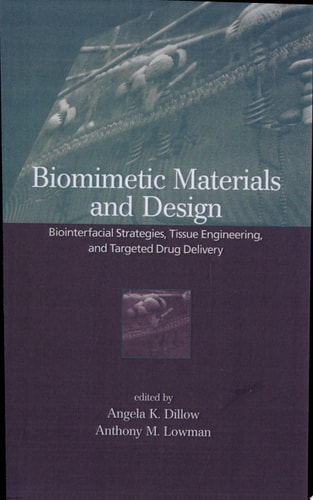
Biomimetic Materials and Design: Biointerfacial Strategies, Tissue Engineering and Targeted Drug Delivery
0
0
As an Amazon Associate and affiliate partner, Menrva Books earns from qualifying purchases. Learn more
Author Description
Detailing techniques in wound healing and reconstruction, this reference describes the mechanisms and architecture of biological systems to formulate and design natural and synthetic compounds, degradable and non-degradable scaffolds, and targeted drug delivery devices. It offers strategies to control adhesive interactions, elicit specific cellular responses, and improve the biocompatibility, performance, and durability of prosthetic materials. Covering advances in the field, the book discusses the effect of topographical features on cell behaviors such as orientation, adhesion, migration, proliferation, and differentation.
Menrva's Summary
THE THESIS
This text investigates how the structural and functional mechanisms of biological systems can be replicated to engineer advanced materials for medical applications. Authors Angela Dillow and Anthony Lowman synthesize current research in biointerfacial strategies to provide a framework for designing synthetic compounds, scaffolds, and drug delivery systems. The work focuses on the intersection of material architecture and cellular response, aiming to improve the efficacy and biocompatibility of modern prosthetic and therapeutic devices.
THE SCOPE MAP
What You Will Find
- Mechanisms of wound healing and tissue reconstruction techniques
- Strategies for controlling adhesive interactions at the biointerface
- Analysis of topographical features affecting cellular migration and differentiation
- Methodologies for developing degradable and non-degradable scaffolds
THE AUTHORITY PERSPECTIVE
Experts identify this work as a technical reference for researchers and students engaged in the development of biomimetic materials. Readers frequently note the academic density of the prose, which serves as a foundational resource for understanding the integration of synthetic compounds with biological environments.
Page Count:
696
Publication Date:
2002-01-01
Publisher:
Taylor & Francis Group
ISBN-10:
020390897X
ISBN-13:
9780203908976
Science
Allied Health
Biomedical Engineering
Tissue Engineering
Pharmacology
Biomedical
Community Tags
Similar Books