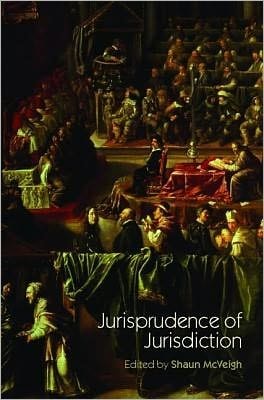
Jurisprudence of Jurisdiction
0
0
As an Amazon Associate and affiliate partner, Menrva Books earns from qualifying purchases. Learn more
Author Description
For much of the history of the western legal order, jurisdiction has been the first question of law. This book investigates the difference that jurisdiction continues to make to the ordering of normative existence. It also follows the speculation that without an account of jurisdiction, jurisprudence would be left speechless, with no power to address the conditions of attachment to legal and political order.The starting point of this book lies with the claim that a sharper focus can be given to normative legal ordering through questions of jurisdiction than can be through those of moral responsibility or social action. This is so because jurisdiction articulates both the potentiality of law and the conditions of its exercise. It provides the idiom of response to the fact that there is law and to the fact that law institutes, judges and addresses a form of life. From this viewpoint the contributors to this book examine the institution of human rights, the new global and national orders of sovereign power and of trade and information, the judgment and government of death and desire, and the address of colonial and post-colonial legal idioms. In doing this the contributors also provide for the elaboration of questions of jurisdiction as part of the resources and repertoires of jurisprudence.This book provides a point of entry to an emergent genre of writing within doctrinal, historical and critical jurisprudence that has returned to questions of jurisdiction to think again about juridical order and change. In so doing, it also points to questions that must be asked for there to be any interdisciplinary study that addresses law.
Menrva's Summary
THE THESIS
This book investigates how the concept of jurisdiction functions as the foundational mechanism for ordering normative existence within the Western legal tradition. Shaun McVeigh, alongside various contributors, argues that jurisdiction is the primary site where law articulates its potentiality and exercises its authority. By shifting the focus from moral responsibility to jurisdictional questions, the text provides a framework for understanding how law institutes, judges, and addresses the conditions of human life and political order.
THE SCOPE MAP
What You Will Find
- Analysis of the institution of human rights and its jurisdictional underpinnings.
- Examination of sovereign power within global and national trade and information networks.
- Critical inquiry into the governance of death, desire, and colonial legal idioms.
- Methodological resources for interdisciplinary legal studies and doctrinal jurisprudence.
THE AUTHORITY PERSPECTIVE
Scholars and legal theorists recognize this work as a significant contribution to the emergent genre of critical jurisprudence. Readers frequently note the academic density of the prose, which serves as a foundational text for those examining the intersection of law, politics, and normative order.
Page Count:
0
Publication Date:
2007-01-01
Publisher:
Taylor & Francis Group
ISBN-10:
0203945484
ISBN-13:
9780203945483
Philosophy
Law
Law Philosophy
Jurisdiction
Legal Theory
Jurisprudence
Community Tags
Similar Books