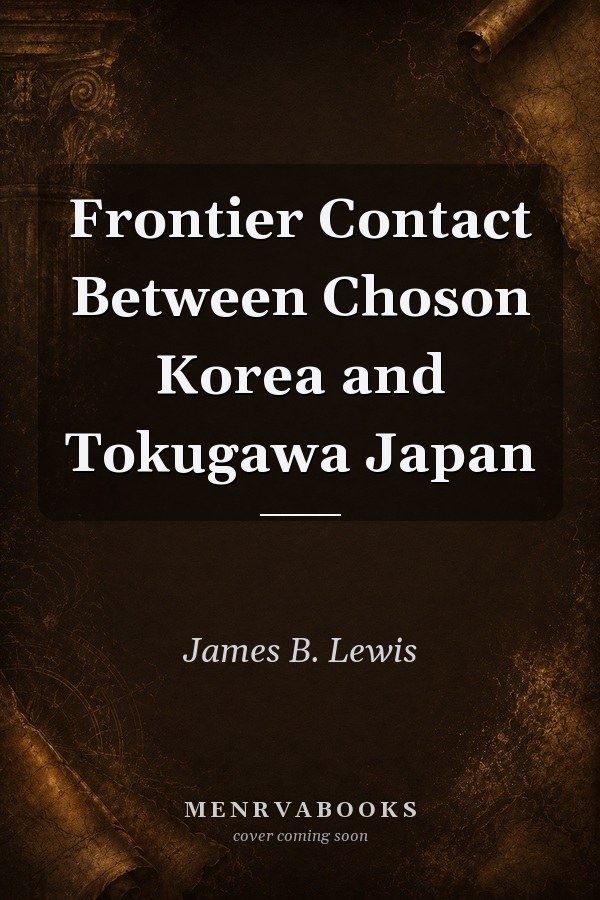
Frontier Contact Between Choson Korea and Tokugawa Japan
0
0
As an Amazon Associate and affiliate partner, Menrva Books earns from qualifying purchases. Learn more
Author Description
Focusing on the period 1600-1900, this ground-breaking work presents Korean history as a tension between structures and agents. It examines economy, demography, and mentalities and focuses on Korean and Japanese attitudes towards each other, forged at their point of contact on the frontier. The book argues that frontier contact in the pre-modern world was at least as important for the formation of cultural perceptions and historical memory as the writings of intellectuals far away in national centres. It raises questions about pre-modern self-perceptions and the processes by which perceptions were formed of other peoples. The book also links local history with transnational relations and presents East Asian pre-modern history in a completely new light.
Menrva's Summary
THE THESIS
This book investigates how frontier interactions between Choson Korea and Tokugawa Japan shaped the development of national identity, cultural perception, and historical memory between 1600 and 1900. James B. Lewis, a scholar of East Asian history, utilizes a framework that balances structural analysis with individual agency to challenge traditional historiography. By examining economic data, demographic shifts, and shifting mentalities, the author argues that local contact zones were more influential in defining cross-cultural relations than the abstract theories produced by intellectuals in national capitals.
THE SCOPE MAP
What You Will Find
- Analysis of the diplomatic and economic frontier between Korea and Japan from 1600 to 1900.
- Examination of how local interactions influenced broader transnational relations and national self-perception.
- Integration of demographic and economic data to explain shifts in cultural attitudes.
- A methodology that connects micro-history at the border with macro-historical trends in East Asia.
THE AUTHORITY PERSPECTIVE
Historians and regional specialists recognize this work as a significant contribution to the study of pre-modern East Asian diplomatic history. Readers frequently note the academic density of the prose and the author's meticulous use of primary sources to reconstruct the realities of borderland contact.
Page Count:
336
Publication Date:
2005-01-01
Publisher:
Taylor & Francis Group
ISBN-10:
0203987322
ISBN-13:
9780203987322
History
International relations
Korean History
Asian History
Japanese History
Community Tags
Other Editions(5)


Similar Books