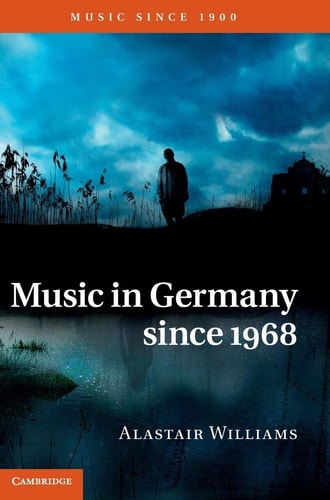
Music in Germany since 1968
0
0
As an Amazon Associate and affiliate partner, Menrva Books earns from qualifying purchases. Learn more
Author Description
Music in Germany since 1968 modifies the dominant historiography of music in post-war Germany by shifting its axis from the years of reconstruction after 1945 to the era following the events of 1968. Arguing that the social transformations of 1968 led to a new phase of music in Germany, Alastair Williams examines the key topics, including responses to serialism, music and politics, and the re-evaluation of tradition. The book devotes central chapters to Helmut Lachenmann and Wolfgang Rihm, as focal points for areas such as postmodernism, musical semiotics and action-based gestures. Further chapters widen the scope by considering the precursors and contemporaries of Rihm and Lachenmann, especially in relation to the idea of historical inclusion. Williams's study also assesses the development of the Darmstadt summer courses, addresses the significance of German reunification, and considers the role of Germany in a new stage of musical modernism.
Menrva's Summary
THE THESIS
This book reorients the study of post-war German music by focusing on the transformative impact of 1968. Alastair Williams argues that the social and cultural shifts of 1968 ushered in a new era for music in Germany, moving beyond the immediate post-war reconstruction period. The study investigates crucial themes such as the reception of serialism, the intricate relationship between music and politics, and the critical re-evaluation of musical tradition. Central to the analysis are the works and ideas of Helmut Lachenmann and Wolfgang Rihm, examined through the lenses of postmodernism, musical semiotics, and action-based gestures.
THE SCOPE MAP
- Analysis of music in Germany from 1968 onwards, challenging traditional historiography.
- Examination of key topics including responses to serialism, music and politics, and tradition.
- In-depth chapters on composers Helmut Lachenmann and Wolfgang Rihm.
- Exploration of postmodernism, musical semiotics, and action-based gestures.
- Consideration of precursors and contemporaries of Rihm and Lachenmann.
- Assessment of the Darmstadt summer courses and the significance of German reunification.
- Discussion of Germany's role in a new phase of musical modernism.
THE AUTHORITY PERSPECTIVE
This scholarly work is positioned as a significant revisionist history of 20th-century German music. By shifting the focus from the post-war reconstruction to the period following 1968, the book offers a new framework for understanding musical developments. The detailed examination of composers like Lachenmann and Rihm, alongside broader themes such as postmodernism and the Darmstadt courses, suggests a comprehensive and nuanced analysis. The study aims to re-evaluate the trajectory of musical modernism in Germany within a changing social and political landscape.
Page Count:
294
Publication Date:
2017-02-02
Publisher:
Cambridge University Press
ISBN-10:
1316641945
ISBN-13:
9781316641941
History
Non-Fiction
Music History
Postmodernism
German Studies
Musicology