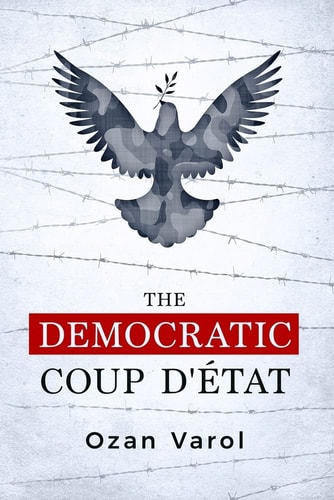
The Democratic Coup d'État
0
0
As an Amazon Associate and affiliate partner, Menrva Books earns from qualifying purchases. Learn more
Author Description
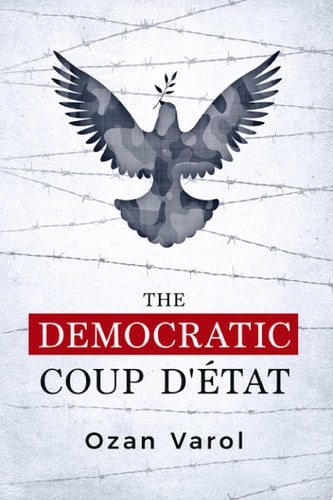
The term coup d'état--French for stroke of the state--brings to mind coups staged by power-hungry generals who overthrow the existing regime, not to democratize, but to concentrate power in their own hands as dictators. We assume all coups look the same, smell the same, and present the same threats to democracy.It's a powerful, concise, and self-reinforcing idea. It's also wrong.In The Democratic Coup d'État, Ozan Varol advances a simple, yet controversial, argument: Sometimes, a democracy is established through a military coup. Covering events from the Athenian Navy's stance in 411 B.C. against a tyrannical home government, to coups in the American colonies that ousted corrupt British governors, to twentieth-century coups that toppled dictators and established democracy in countries as diverse as Guinea-Bissau, Portugal, and Colombia, the book takes the reader on a gripping journey.Connecting the dots between these neglected events, Varol weaves a balanced narrative that challenges everything we thought we knew about military coups. In so doing, he tackles several baffling questions: How can an event as undemocratic as a military coup lead to democracy? Why would imposing generals-armed with tanks and guns and all-voluntarily surrender power to civilian politicians? What distinguishes militaries that help build democracies from those that destroy them?Varol's arguments made headlines across the globe in major media outlets and were cited critically in a public speech by Turkish President Recep Tayyip Erdogan.Written for a general audience, this book will entertain, challenge, and provoke, but more importantly, serve as a reminder of the imperative to question the standard narratives about our world and engage with all ideas, no matter how controversial.
Menrva's Summary
THE THESIS
This book investigates the counterintuitive phenomenon of military coups that result in the establishment or restoration of democratic governance rather than the consolidation of authoritarian power. Ozan O. Varol, a legal scholar and former law clerk, utilizes a comparative historical framework to challenge the conventional assumption that all military interventions are inherently anti-democratic. By analyzing diverse case studies, he argues that specific conditions can incentivize military actors to facilitate democratic transitions, thereby complicating the binary view of coups as exclusively destructive forces.
THE SCOPE MAP
What You Will Find
- Historical analysis of military interventions ranging from ancient Athens to twentieth-century global conflicts.
- A theoretical framework identifying the variables that distinguish democratic-leaning coups from authoritarian ones.
- Examination of the motivations behind military leaders who voluntarily relinquish power to civilian authorities.
Scope Limits
- The text does not provide a comprehensive manual for predicting future coup outcomes.
- It does not focus on the internal psychological profiles of individual military commanders.
THE AUTHORITY PERSPECTIVE
Scholars and political analysts frequently note the provocative nature of Varol's central argument, which challenges established paradigms in democratic transition theory. The text is recognized for its accessibility to a general audience while maintaining a rigorous academic inquiry into the mechanics of political change.
Page Count:
250
Publication Date:
2017-01-01
Publisher:
Oxford University Press
ISBN-10:
0190626011
ISBN-13:
9780190626013
History
International relations
Military History
Government
Democracy
Coups Detat
Democracy history