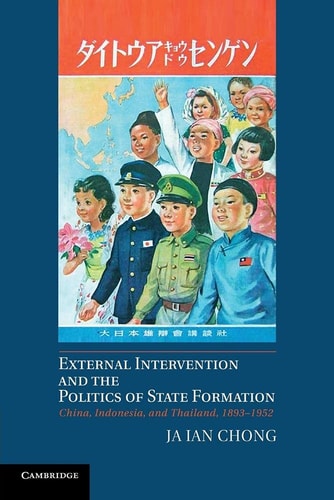
External Intervention and the Politics of State Formation: China, Indonesia, and Thailand, 1893-1952
0
0
As an Amazon Associate and affiliate partner, Menrva Books earns from qualifying purchases. Learn more
Author Description
This book explores ways in which foreign intervention and external rivalries can affect the institutionalization of governance in weak states. When sufficiently competitive, foreign rivalries in a weak state can actually foster the political centralization, territoriality, and autonomy associated with state sovereignty. This counterintuitive finding comes from studying the collective effects of foreign contestation over a weak state as informed by changes in the expected opportunity cost of intervention for outside actors. When interveners associate high opportunity costs with intervention, they bolster sovereign statehood as a next best alternative to their worst fear - domination of that polity by adversaries. Sovereign statehood develops if foreign actors concurrently and consistently behave this way toward a weak state. This book evaluates that argument against three "least likely" cases - China, Indonesia, and Thailand between the late nineteenth and mid-twentieth centuries.
Menrva's Summary
THE THESIS
This book investigates how external intervention and foreign rivalries can paradoxically strengthen the state formation process in weak states. It argues that when foreign powers compete intensely within a weak state, this rivalry can lead to greater political centralization, territorial consolidation, and autonomy, hallmarks of sovereign statehood. The author posits that this occurs when external actors perceive high opportunity costs associated with direct intervention, leading them to bolster the target state's sovereignty as a preferable alternative to their rivals dominating the polity. This theory is tested against the cases of China, Indonesia, and Thailand from the late 19th to the mid-20th centuries.
THE SCOPE MAP
- Analysis of foreign intervention's impact on state institutionalization.
- Exploration of the relationship between external rivalries and political centralization.
- Examination of how perceived opportunity costs of intervention shape foreign policy towards weak states.
- Case studies of China, Indonesia, and Thailand between 1893 and 1952.
- Focus on the development of territoriality and autonomy in state sovereignty.
- Evaluation of the 'least likely' cases for the theory of external intervention fostering statehood.
THE AUTHORITY PERSPECTIVE
The book presents a compelling, albeit counterintuitive, argument regarding the positive effects of foreign intervention on state formation in weak states. Its comparative approach, focusing on China, Indonesia, and Thailand, offers a rich historical analysis to support its theoretical framework. The research delves into the complex interplay between international rivalries and domestic political development during a critical period of global history. The work is likely to be of significant interest to scholars of international relations, comparative politics, and Asian history.
Page Count:
304
Publication Date:
2014-05-01
Publisher:
Cambridge University Press
ISBN-10:
1107679788
ISBN-13:
9781107679788
History
Non-Fiction
Politics
International relations
State Formation
Comparative Politics
Community Tags
Other Editions(2)

Similar Books