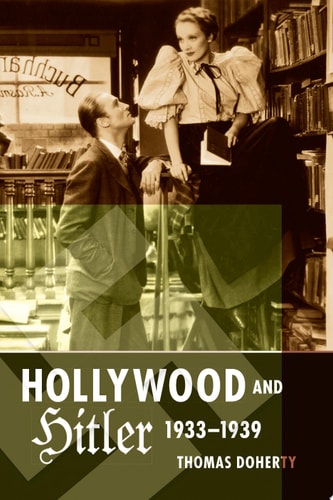
Hollywood and Hitler, 1933-1939
0
0
As an Amazon Associate and affiliate partner, Menrva Books earns from qualifying purchases. Learn more
Author Description
Between 1933 and 1939, representations of the Nazis and the full meaning of Nazism came slowly to Hollywood, growing more ominous and distinct only as the decade wore on. Recapturing what ordinary Americans saw on the screen during the emerging Nazi threat, Thomas Doherty reclaims forgotten films, such as Hitler's Reign of Terror (1934), a pioneering anti-Nazi docudrama by Cornelius Vanderbilt Jr.; I Was a Captive of Nazi Germany (1936), a sensational true tale of "a Hollywood girl in Naziland!"; and Professor Mamlock (1938), an anti-Nazi film made by German refugees living in the Soviet Union. Doherty also recounts how the disproportionately Jewish backgrounds of the executives of the studios and the workers on the payroll shaded reactions to what was never simply a business decision. As Europe hurtled toward war, a proxy battle waged in Hollywood over how to conduct business with the Nazis, how to cover Hitler and his victims in the newsreels, and whether to address or ignore Nazism in Hollywood feature films. Should Hollywood lie low, or stand tall and sound the alarm? Doherty's history features a cast of charismatic personalities: Carl Laemmle, the German Jewish founder of Universal Pictures, whose production of All Quiet on the Western Front (1930) enraged the nascent Nazi movement; Georg Gyssling, the Nazi consul in Los Angeles, who read the Hollywood trade press as avidly as any studio mogul; Vittorio Mussolini, son of the fascist dictator and aspiring motion picture impresario; Leni Riefenstahl, the Valkyrie goddess of the Third Reich who came to America to peddle distribution rights for Olympia (1938); screenwriters Donald Ogden Stewart and Dorothy Parker, founders of the Hollywood Anti-Nazi League; and Harry and Jack Warner of Warner Bros., who yoked anti-Nazism to patriotic Americanism and finally broke the embargo against anti-Nazi cinema with Confessions of a Nazi Spy (1939).
Menrva's Summary
THE THESIS
This book investigates how Hollywood, between 1933 and 1939, gradually came to terms with the emerging threat of Nazism and its implications. The narrative explores the evolving cinematic representations of Nazis and Nazism, moving from initial ambiguity to increasing alarm as the decade progressed. It examines what ordinary Americans saw on screen, highlighting forgotten films that addressed the Nazi menace, and delves into the complex reactions shaped by the disproportionately Jewish backgrounds of studio executives and workers. The book details a proxy battle waged within Hollywood over business dealings with Nazi Germany, newsreel coverage, and the decision of whether to feature Nazism in feature films, posing the question of whether Hollywood should remain silent or sound the alarm against the rising tide of fascism in Europe.
THE SCOPE MAP
- Analysis of forgotten anti-Nazi films like 'Hitler's Reign of Terror' (1934) and 'I Was a Captive of Nazi Germany' (1936).
- Exploration of the influence of Jewish studio executives and workers on Hollywood's response to Nazism.
- Recounting of the proxy battle within Hollywood concerning business with Nazi Germany and film content.
- Profiles of key personalities including Carl Laemmle, Georg Gyssling, Vittorio Mussolini, Leni Riefenstahl, Donald Ogden Stewart, Dorothy Parker, and the Warner brothers.
- Examination of the film 'Confessions of a Nazi Spy' (1939) as a turning point in anti-Nazi cinema.
- Discussion of the ethical and business dilemmas faced by Hollywood in the lead-up to World War II.
THE AUTHORITY PERSPECTIVE
Thomas Doherty's historical account is recognized for its meticulous research into Hollywood's complex relationship with Nazi Germany during the 1930s. The book is praised for its detailed exploration of how cinematic portrayals of Nazism evolved and for highlighting lesser-known films that engaged with the emerging threat. It effectively captures the internal debates and external pressures that shaped Hollywood's decisions regarding content and business practices. The narrative is further enriched by its focus on the influential figures who navigated this fraught period, offering a comprehensive look at a critical moment in film history and international relations.
Page Count:
432
Publication Date:
2013-04-02
Publisher:
Columbia University Press
ISBN-10:
0231535147
ISBN-13:
9780231535144
Non-Fiction
Politics
History
Film Studies
Community Tags
Similar Books