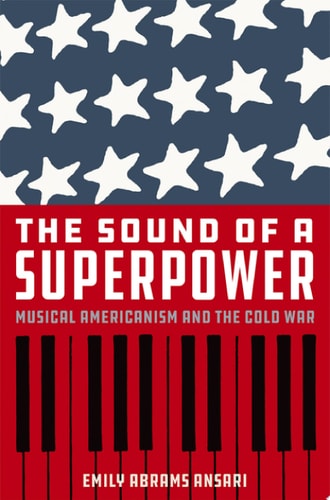
The Sound Of A Superpower
0
0
As an Amazon Associate and affiliate partner, Menrva Books earns from qualifying purchases. Learn more
Author Description
Classical composers seeking to create an American sound enjoyed unprecedented success during the 1930s and 1940s. Aaron Copland, Roy Harris, Howard Hanson and others brought national and international attention to American composers for the first time in history. In the years after World War II, however, something changed. The prestige of musical Americanism waned rapidly as anti-communists made accusations against leading Americanist composers. Meanwhile a method of harmonic organization that some considered more Cold War-appropriate--serialism--began to rise in status. For many composers and historians, the Cold War had effectively killed off musical Americanism. In The Sound of a Superpower: Musical Americanism and the Cold War, Emily Abrams Ansari offers a fuller, more nuanced picture of the effect of the Cold War on Americanist composers. The ideological conflict brought both challenges and opportunities. Some Americanist composers struggled greatly in this new artistic and political environment. Those with leftist politics sensed a growing gap between the United States that their music imagined and the aggressive global superpower that their nation seemed to be becoming. But these same composers would find unique opportunities to ensure the survival of musical Americanism thanks to the federal government, which wanted to use American music as a Cold War propaganda tool. By serving as advisors to cultural diplomacy programs and touring as artistic ambassadors, the Americanists could bring their now government-backed music to new global audiences. Some with more right-wing politics, meanwhile, would actually flourish in the new ideological environment, by aligning their music with Cold War conceptions of American identity. The Americanists' efforts to safeguard the reputation of their style would have significant consequences. Ultimately, Ansari shows, they effected a rebranding of musical Americanism, with consequences that remain with us today.
Menrva's Summary
THE THESIS
This book investigates how the Cold War climate reshaped the trajectory and public perception of Americanist musical composition during the mid-twentieth century. Emily Abrams Ansari, a musicologist, utilizes archival research and historical analysis to challenge the narrative that the Cold War simply extinguished the Americanist movement. Instead, she argues that ideological pressures forced a complex rebranding of the style, as composers navigated the tension between their artistic visions and the demands of a global superpower.
THE SCOPE MAP
What You Will Find
- Analysis of the shift from the populist Americanism of the 1930s to the post-WWII political environment.
- Examination of the role of the federal government in utilizing music as a tool for cultural diplomacy.
- Case studies of composers with varying political alignments, from leftist to right-wing, and their responses to Cold War pressures.
Scope Limits
- The text focuses primarily on the Americanist school of composers rather than the broader spectrum of all American classical music.
- It does not provide an exhaustive technical analysis of serialism, focusing instead on its socio-political status during the era.
THE AUTHORITY PERSPECTIVE
Scholars and music historians recognize this work as a significant contribution to the understanding of mid-century American cultural policy. Readers frequently note the clarity with which Ansari connects political ideology to aesthetic shifts in composition.
Page Count:
272
Publication Date:
2018-01-01
Publisher:
Oxford University Press
ISBN-10:
0190649704
ISBN-13:
9780190649708
American History
Music History
Cold War
Musicology
Political History
Community Tags
Similar Books