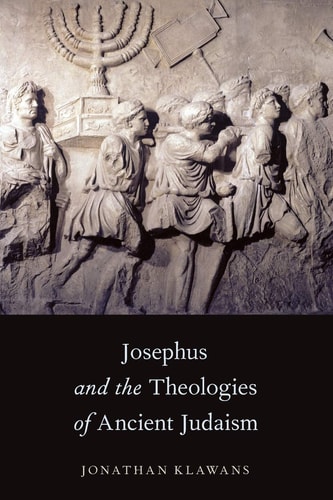
Josephus and the Theologies of Ancient Judaism
0
0
As an Amazon Associate and affiliate partner, Menrva Books earns from qualifying purchases. Learn more
Author Description
Though considered one of the most important informants about Judaism in the first century CE, the Jewish historian Flavius Josephus's testimony is often overlooked or downplayed. Jonathan Klawans's Josephus and the Theologies of Ancient Judaism reexamines Josephus's descriptions of sectarian disagreements concerning determinism and free will, the afterlife, and scriptural authority. In each case, Josephus's testimony is analyzed in light of his works' general concerns as well as relevant biblical, rabbinic, and Dead Sea texts.Many scholars today argue that ancient Jewish sectarian disputes revolved primarily or even exclusively around matters of ritual law, such as calendar, cultic practices, or priestly succession. Josephus, however, indicates that the Pharisees, Sadducees, and Essenes disagreed about matters of theology, such as afterlife and determinism. Similarly, many scholars today argue that ancient Judaism was thrust into a theological crisis in the wake of the destruction of the second temple in 70 CE, yet Josephus's works indicate that Jews were readily able to make sense of the catastrophe in light of biblical precedents and contemporary beliefs.Without denying the importance of Jewish law-and recognizing Josephus's embellishments and exaggerations-Josephus and the Theologies of Ancient Judaism calls for a renewed focus on Josephus's testimony, and models an approach to ancient Judaism that gives theological questions a deserved place alongside matters of legal concern. Ancient Jewish theology was indeed significant, diverse, and sufficiently robust to respond to the crisis of its day.
Menrva's Summary
THE THESIS
This book investigates whether theological disputes, rather than solely legal ones, served as the primary driver of sectarian conflict in first-century Judaism. Jonathan Klawans, a scholar of ancient Judaism, utilizes the historical writings of Flavius Josephus to challenge the prevailing academic consensus that focuses exclusively on ritual law. By cross-referencing Josephus with Dead Sea Scrolls, rabbinic literature, and biblical texts, Klawans argues that theological concerns regarding free will, the afterlife, and divine providence were central to the identity of the Pharisees, Sadducees, and Essenes.
THE SCOPE MAP
What You Will Find
- Analysis of Josephus's accounts of sectarian disagreements regarding determinism and the afterlife.
- Comparative study of Josephus against Dead Sea Scrolls and rabbinic sources.
- Re-evaluation of the impact of the Second Temple destruction on Jewish theological development.
Scope Limits
- The text does not provide a comprehensive biography of Josephus.
- It does not attempt to cover the entirety of Jewish law or ritual practice.
THE AUTHORITY PERSPECTIVE
Scholars recognize this work as a significant intervention in the study of Second Temple Judaism, particularly for its insistence on the intellectual depth of ancient Jewish sects. Readers frequently note the academic density of the prose, which is intended for students and researchers of religious history.
Page Count:
400
Publication Date:
2016-12-01
Publisher:
Oxford University Press
ISBN-10:
0190646187
ISBN-13:
9780190646189
History
Religion
Ancient History
Theology
Judaism