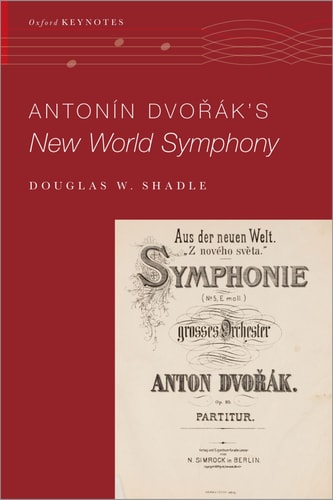
Antonín Dvořák's New World Symphony
0
0
As an Amazon Associate and affiliate partner, Menrva Books earns from qualifying purchases. Learn more
Author Description
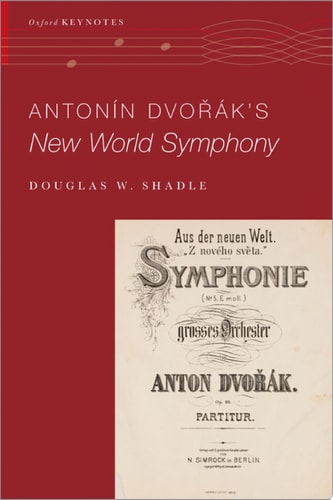
Before Antonín Dvorák's New World Symphony became one of the most universally beloved pieces of classical music, it exposed the deep wounds of racism at the dawn of the Jim Crow era while serving as a flashpoint in broader debates about the American ideals of freedom and equality. Drawing from a diverse array of historical voices, author Douglas W. Shadle's richly textured account of the symphony's 1893 premiere shows that even the classical concert hall could not remain insulated from the country's racial politics.
Menrva's Summary
THE THESIS
This book investigates how Antonín Dvořák's Symphony No. 9, the 'New World Symphony,' functioned as a catalyst for national discourse regarding racial inequality and American identity during the Jim Crow era. Douglas W. Shadle, a musicologist specializing in American symphonic music, utilizes archival research and period-specific journalism to reconstruct the cultural climate surrounding the 1893 premiere. He argues that the symphony was not merely an aesthetic achievement but a political instrument that forced the American public to confront its own contradictions regarding freedom and equality.
THE SCOPE MAP
What You Will Find
- Historical analysis of the 1893 premiere of the New World Symphony
- Examination of the intersection between classical music and Jim Crow-era racial politics
- Contextualization of Dvořák's influence on American musical identity
Scope Limits
- Detailed musicological analysis of the symphony's formal structure
- Comprehensive biography of Dvořák's entire career
THE AUTHORITY PERSPECTIVE
Experts recognize this work as a significant contribution to the study of American musicology, particularly for its focus on the sociopolitical context of classical performance. Readers frequently note that the prose is accessible to non-specialists while maintaining the academic rigor expected of the Oxford Keynotes series.
Page Count:
204
Publication Date:
2021-03-12
Publisher:
Oxford University Press
ISBN-10:
0190645636
ISBN-13:
9780190645632
Biography
American History
Criticism history
Music History