Perceptual Learning: The Flexibility of the Senses
0
0
As an Amazon Associate and affiliate partner, Menrva Books earns from qualifying purchases. Learn more
Author Description
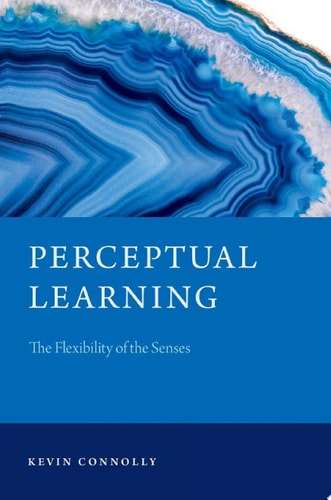
Experts from wine tasters to radiologists to bird watchers have all undergone perceptual learning-long-term changes in perception that result from practice or experience. Philosophers have been discussing such cases for centuries, from the 14th-century Indian philosopher Vedanta Desika to the 18th-century Scottish philosopher Thomas Reid, and into contemporary times. This book uses recent evidence from psychology and neuroscience to show that perceptual learning is genuinely perceptual, rather than post-perceptual. It also offers a taxonomy for classifying cases in the philosophical literature. In some cases, perceptual learning involves changes in how one attends; in other cases, it involves a learned ability to differentiate two properties, or to perceive two properties as unified. Connolly uses this taxonomy to rethink several domains of perception in terms of perceptual learning, including multisensory perception, color perception, and speech perception. As a whole, the book offers a theory of the function of perceptual learning. Perceptual learning embeds into our quick perceptual systems what would be a slower task were it to be done in a controlled, cognitive manner. A novice wine taster drinking a Cabernet Sauvignon might have to think about its features first and then infer the type of wine, while an expert can identify it immediately. This learned ability to immediately identify the wine enables the expert to think about other things like the vineyard or the vintage of the wine. More generally, perceptual learning serves to free up cognitive resources for other tasks. This book offers a comprehensive empirically-informed account, and explores the nature, scope, and theoretical implications of perceptual learning.
Menrva's Summary
THE THESIS
This book investigates whether perceptual learning constitutes a fundamental change in sensory perception or merely a post-perceptual cognitive adjustment. Kevin Connolly, a philosopher specializing in the mind and perception, synthesizes empirical data from psychology and neuroscience to argue that perceptual learning is a genuine modification of the perceptual system. He establishes a taxonomy of learning types to clarify how practice alters the way individuals attend to, differentiate, and unify sensory properties.
THE SCOPE MAP
What You Will Find
- A taxonomy for classifying perceptual learning cases in philosophical literature
- Analysis of multisensory, color, and speech perception
- Theoretical framework regarding the function of perceptual learning in cognitive resource management
Scope Limits
- Does not provide a practical training manual for specific sensory skills
- Does not focus on the clinical pathology of perceptual disorders
THE AUTHORITY PERSPECTIVE
Experts identify this work as a rigorous contribution to the philosophy of mind that successfully bridges the gap between historical philosophical inquiry and modern cognitive science. Readers frequently note the academic density of the prose, which is intended for scholars and students familiar with the intersection of epistemology and neuroscience.
Page Count:
259
Publication Date:
2019-01-01
Publisher:
Oxford University Press
ISBN-10:
0190662913
ISBN-13:
9780190662912
Philosophy
Psychology
Perception
Philosophy of
Neuroscience
Community Tags
Similar Books