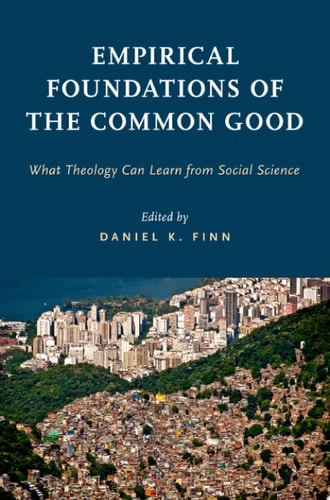
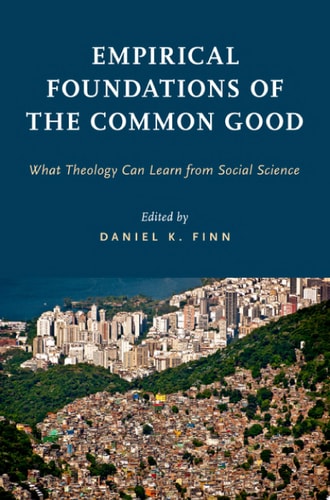
Empirical Foundations of the Common Good: What Theology Can Learn from Social Science
0
0
As an Amazon Associate and affiliate partner, Menrva Books earns from qualifying purchases. Learn more
Author Description
The Idea Of The Common Good Was Borrowed By The Fathers Of The Early Catholic Church From The Rich Philosophical Traditions Of Ancient Greece And Rome. It Has Been A Fundamental Part Of Catholic Thinking About Social, Political, And Economic Life Throughout The Catholic Intellectual Tradition, From Augustine And Aquinas To Modern Catholic Social Thought In The Encyclicals Of Popes In Recent Centuries. Yet This History Has Been Rooted In The Traditions Of Philosophy And Theology. With The Rise Of The Social Sciences In The Nineteenth Century As Distinct Disciplines No Longer Limited To The Methods Of Their Philosophical Origins, Humanity Has Learned A Great Deal More About The Human Condition. Empirical Foundations Of The Common Good Asks Two Questions: What Have The Social Sciences Learned About The Common Good? How Might Theology Alter Its Understanding Of The Common Good In Light Of That Insight? In This Volume, Six Social Scientists, With Backgrounds In Economics, Political Science, Sociology, And Policy Analysis, Speak About What Their Disciplines Have To Contribute To Discussions Within Catholic Social Thought About The Common Good. Two Theologians Then Respond By Examining The Insights Of Social Science And Exploring How Catholic Social Thought Can Integrate Social Scientific Insights Into Its Understanding Of The Common Good. This Volume's Interplay Of Social Scientific And Religious Views Is A Unique Contribution To Contemporary Discussion Of What Constitutes The Common Good.
Menrva's Summary
THE THESIS
This volume investigates how contemporary social scientific research can inform and refine the traditional theological understanding of the common good. Daniel K. Finn, a scholar of economics and theology, curates a collection of essays that bridge the gap between historical Catholic social thought and modern empirical disciplines. The text argues that while the concept of the common good has deep roots in philosophy and theology, the rise of social sciences provides necessary, data-driven insights into the complexities of the human condition that theology must now integrate.
THE SCOPE MAP
What You Will Find
- Perspectives from economics, political science, sociology, and policy analysis regarding the common good.
- Theological responses that evaluate and synthesize empirical data within a religious framework.
- An interdisciplinary methodology for reconciling faith-based social ethics with modern academic research.
Scope Limits
- The book does not provide a comprehensive history of all Catholic social encyclicals.
- It does not attempt to resolve every tension between secular scientific methodology and religious dogma.
THE AUTHORITY PERSPECTIVE
Scholars and theologians frequently cite this work as a significant contribution to the dialogue between empirical social science and religious ethics. Readers often note the academic density of the prose, which is intended for those familiar with both theological traditions and social scientific discourse.
Page Count:
256
Publication Date:
2017-09-01
Publisher:
Oxford University Press, Incorporated
ISBN-10:
0190670061
ISBN-13:
9780190670061
Economics
Philosophy
Sociology
Catholic Social Thought
Common Good
Theology
Social Science
Community Tags
Other Editions(2)
Similar Books