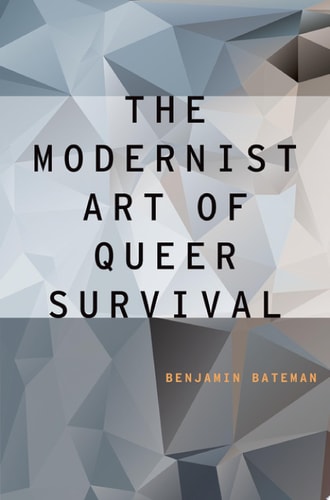
The Modernist Art of Queer Survival
0
0
As an Amazon Associate and affiliate partner, Menrva Books earns from qualifying purchases. Learn more
Author Description
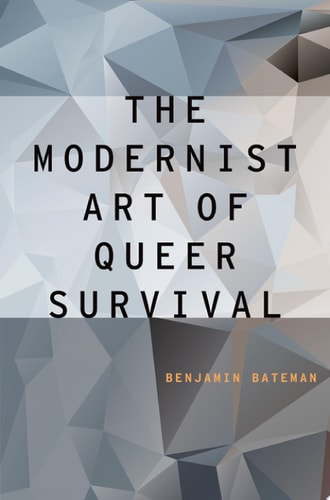
Whether we speak of queer bodies targeted for harassment, queer sensibilities derided as dangerous, or queer intimacies denied legitimacy, we acknowledge a close companionship between queerness and precariousness. Queerness remains continuously under threat; these threats to survival can be immediate, as in the AIDS crises, or more subtle and entrenched. Many queer lives thus end prematurely and drastically-but not all end in the physical expiration of life. Some terminate gradually and even unconsciously in the countless concessions to normativity demanded by dominant cultures that perceive, through a perverse set of projective identifications, their own survival as imperiled by queerness.The Modernist Art of Queer Survival explores an archive of modernist archive of modernist literature that conceives survival as a collective enterprise linking lives across boundaries of race, time, class, species, gender, and sexuality. As social Darwinism promoted a selfish, competitive, and combatively individualistic understanding of survival, the five modernists examined in The Modernist Art of Queer Survival countered by imagining how postures of precarity, vulnerability, humility, and receptivity can breed pleasurably and ecologically sustainable modes of interdependent survival. These modes prove particularly vital and appealing to queer bodies, desires, and intimacies deemed unfit, abnormal, or unproductive by heterosexist ideologies. Authors and texts discussed include Henry James's "The Beast in the Jungle," Oscar Wilde's De Profundis, E.M. Forster's Howards End and A Passage to India, and Willa Cather's "Consequences" and Lucy Gayheart.
Menrva's Summary
THE THESIS
This book investigates how modernist literature reimagines survival not as a competitive individualistic struggle, but as a collective, interdependent enterprise that resists heteronormative pressures. Benjamin Bateman, a scholar in modernist literature and culture, utilizes a close reading of specific canonical texts to argue that queer survival is rooted in vulnerability, humility, and receptivity. He contrasts these queer modes of existence against the social Darwinist frameworks prevalent during the modernist period.
THE SCOPE MAP
What You Will Find
- Analysis of Henry James, Oscar Wilde, E.M. Forster, and Willa Cather
- Theoretical framework connecting precarity to ecological and social sustainability
- Critique of social Darwinism and its impact on queer identity
Scope Limits
- The study focuses primarily on a specific selection of five modernist authors
- It does not provide a comprehensive history of queer theory outside of the modernist literary context
THE AUTHORITY PERSPECTIVE
Scholars in the field of modernist studies recognize this work as a significant contribution to the intersection of queer theory and literary history. Readers frequently note the academic density of the prose, which is intended for an audience familiar with critical theory and modernist literary analysis.
Page Count:
176
Publication Date:
2017-01-01
Publisher:
Oxford University Press
ISBN-10:
0190676558
ISBN-13:
9780190676551
History
Academic
Queer Studies
Indigenous
Modernist
LGBTQ
Literary Criticism
Community Tags
Other Editions(2)
Similar Books