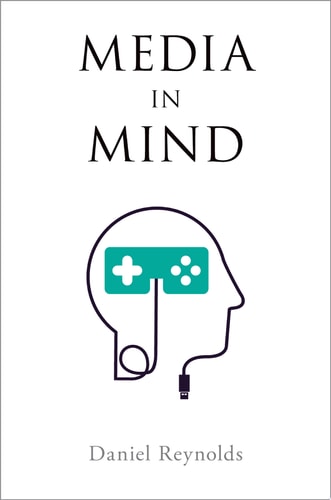
Media in Mind
0
0
As an Amazon Associate and affiliate partner, Menrva Books earns from qualifying purchases. Learn more
Author Description
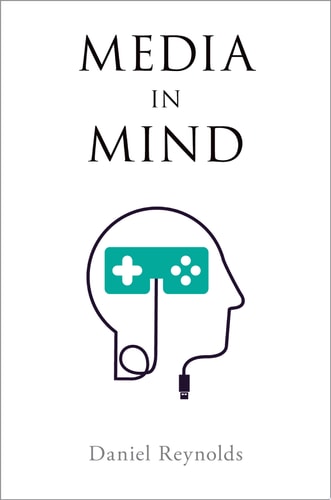
Where do you end, and where do media begin? In Media in Mind, author Daniel Reynolds draws upon naturalist philosophies of the mind from John Dewey through contemporary theories of embodied and extended cognition to make the case that the lines separating media from the minds of their users are not blurry or variable so much as they never existed to begin with.Through analyses of films and video games from 1900 to the present, Media in Mind shows how media forms and technologies challenge dominant models of perception and mental representation, and how they complicate theoretical understanding of concepts like the platform and the interface. In order to do justice to the profound and literally mind-changing power of media, Reynolds argues, we need to think not so much about the relationship between media and the mind as about the roles that media play in our minds. Through this crucial distinction, Media in Mind surveys more than a century of media theory to illustrate the ways that scholars of film and digital media have situated and reconsidered a series of divisions between media, user, and world, and how these conceptual divisions have reflected and inflected their ways of understanding the mind.
Menrva's Summary
THE THESIS
This book investigates the fundamental question of where the boundary between human cognition and media technologies truly lies. Daniel Reynolds, a scholar in media studies, utilizes a framework rooted in the naturalist philosophy of John Dewey and contemporary theories of embodied and extended cognition. He argues that the perceived separation between media and the mind is a conceptual error, proposing instead that media are integral components of mental processes rather than external tools used by a separate mind.
THE SCOPE MAP
What You Will Find
- Analysis of film and video game evolution from 1900 to the present.
- Application of embodied and extended cognition theories to media consumption.
- A historical survey of media theory regarding the interface and the platform.
Scope Limits
- The text does not provide a comprehensive history of all media technologies.
- It does not focus on the sociological or economic impacts of media platforms.
THE AUTHORITY PERSPECTIVE
Scholars and students of media theory identify this work as a significant contribution to the intersection of cognitive science and film studies. Readers frequently note the academic density of the prose, which requires a foundational understanding of philosophical discourse to fully grasp the author's arguments.
Page Count:
218
Publication Date:
2018-01-01
Publisher:
Oxford University Press
ISBN-10:
0190872543
ISBN-13:
9780190872540
Communication Studies
Music History
Mass media
Broadcast History
Digital Media
Media Studies
Philosophy of
Humanities
Film Theory