Toward a Concrete Utopia
0
0
As an Amazon Associate and affiliate partner, Menrva Books earns from qualifying purchases. Learn more
Author Description
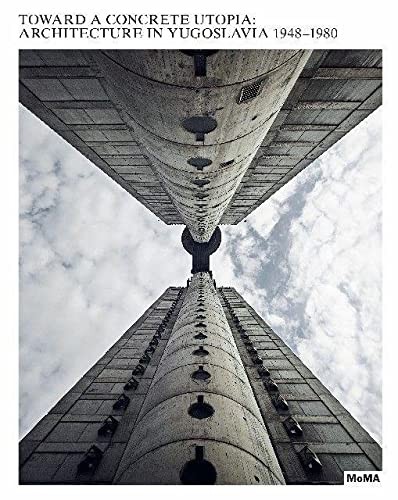
Situated between the capitalist West and the socialist East, Yugoslavia's architects responded to contradictory demands and influences, developing a postwar architecture both in line with and distinct from the design approaches seen elsewhere in Europe and beyond. The architecture that emerged from International Style skyscrapers to Brutalist social condensers is a manifestation of the radical diversity, hybridity, and idealism that characterized the Yugoslav state itself. 'Toward a Concrete Utopia: Architecture in Yugoslavia, 1948-1980' introduces the exceptional work of socialist Yugoslavia's leading architects to an international audience for the first time, highlighting a significant yet thus-far understudied body of modernist architecture, whose forward-thinking contributions still resonate today.
Menrva's Summary
THE THESIS
This book explores the unique architectural landscape of Yugoslavia between 1948 and 1980, a period marked by the nation's complex geopolitical position between capitalist and socialist blocs. The text delves into how Yugoslav architects navigated these influences, creating a distinct modernist style that blended international trends with local specificities. It examines a range of structures, from imposing social condensers to sleek skyscrapers, showcasing the diversity and idealism embedded in the nation's built environment. The work aims to bring this significant, yet often overlooked, architectural heritage to a global audience, underscoring its lasting relevance.
THE SCOPE MAP
- An examination of Yugoslav architecture from 1948 to 1980.
- Analysis of the influence of both Western capitalist and Eastern socialist design approaches.
- Case studies of various architectural styles, including International Style skyscrapers and Brutalist social condensers.
- Exploration of the themes of diversity, hybridity, and idealism in Yugoslav design.
- Introduction to the work of leading Yugoslav architects of the socialist era.
- Discussion of the enduring impact and resonance of this modernist architecture.
THE AUTHORITY PERSPECTIVE
The book is presented as an introduction to a significant yet understudied body of modernist architecture, aiming to bring the work of Yugoslavia's leading architects to an international audience for the first time. The description suggests that the architecture discussed is characterized by radical diversity, hybridity, and idealism, reflecting the Yugoslav state itself. It highlights the forward-thinking contributions of these architects and their continued relevance today. The framing implies an academic or art-historical focus, likely appealing to specialists and enthusiasts of modernist architecture and 20th-century design history.
Page Count:
184
Publication Date:
2018-01-01
ISBN-10:
1633450511
ISBN-13:
9781633450516
Non-Fiction
History
Architecture
Modernism
Social History
Community Tags
Similar Books