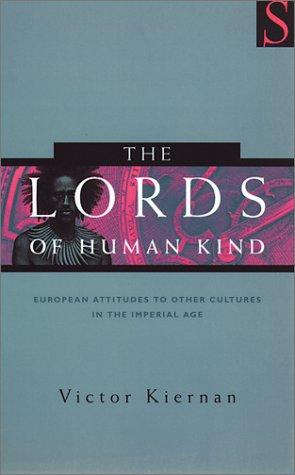
The Lords of Human Kind: European Attitudes Towards the Outside World in the Imperial Age
0
0
As an Amazon Associate and affiliate partner, Menrva Books earns from qualifying purchases. Learn more
Author Description
When European explorers went out into the world to open up trade routes and establish colonies, they brought back much more than silks and spices, cotton and tea. Inevitably, they came into contact with the peoples of other parts of the world and formed views of them, occasionally admiring, more often hostile or contemptuous. Using a stunning array of sources - missionaries' memoirs, the letters of diplomats' wives, explorers' diaries and the work of writers as diverse as Voltaire, Thackeray, Oliver Goldsmith and, of course, Kipling - Victor Kiernan teases out the full range of European attitudes to other peoples. Erudite, ironic and global in its scope, The Lords of Human Kind has been a major influence on a generation of historians and cultural critics and is a landmark in the history of Eurocentrism. The legacy of colonial attitudes to other cultures is, of course, an integral part of the modern world, and the history of their formation is one which cannot be ignored.
Menrva's Summary
THE THESIS
This book investigates the complex and often contradictory attitudes of Europeans towards non-European peoples during the age of imperialism. Victor Kiernan, drawing on a wide range of primary sources including missionary memoirs, diplomatic correspondence, and explorers' diaries, analyzes the spectrum of European perceptions, from admiration to outright contempt. The work examines how these views were shaped by colonial expansion, trade, and cultural encounters, and explores the intellectual and literary figures who contributed to this discourse. Kiernan's analysis highlights the pervasive nature of Eurocentrism and its lasting impact on global relations.
THE SCOPE MAP
- Analysis of European attitudes towards non-European peoples during the Imperial Age.
- Use of diverse primary sources: missionaries' memoirs, diplomats' letters, explorers' diaries.
- Examination of literary figures' contributions, including Voltaire, Thackeray, Goldsmith, and Kipling.
- Exploration of the historical formation of colonial attitudes and their legacy.
- Focus on the concept and impact of Eurocentrism.
- Global scope in examining cross-cultural perceptions.
- Erudite and ironic tone in historical analysis.
THE AUTHORITY PERSPECTIVE
Victor Kiernan's 'The Lords of Human Kind' is recognized as a seminal work that has significantly influenced historical and cultural criticism, particularly in the study of Eurocentrism. The book's comprehensive scope and its deep dive into the formation of European attitudes during the imperial era have made it a foundational text for understanding the legacy of colonialism. Its rigorous use of varied sources and its critical examination of cultural perceptions are frequently cited by scholars. The work remains essential for comprehending the historical roots of contemporary global attitudes and power dynamics.
Page Count:
336
Publication Date:
1986-01-01
ISBN-10:
0231059418
ISBN-13:
9780231059411
History
Non-Fiction
Imperialism
Eurocentrism
Cultural History
Attitudes
Community Tags
Similar Books