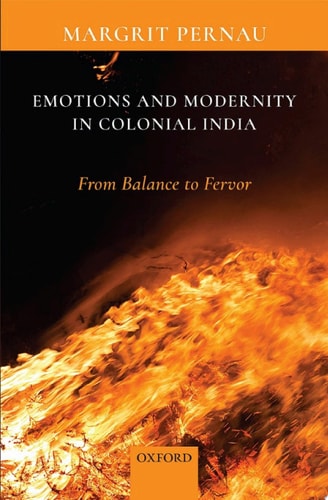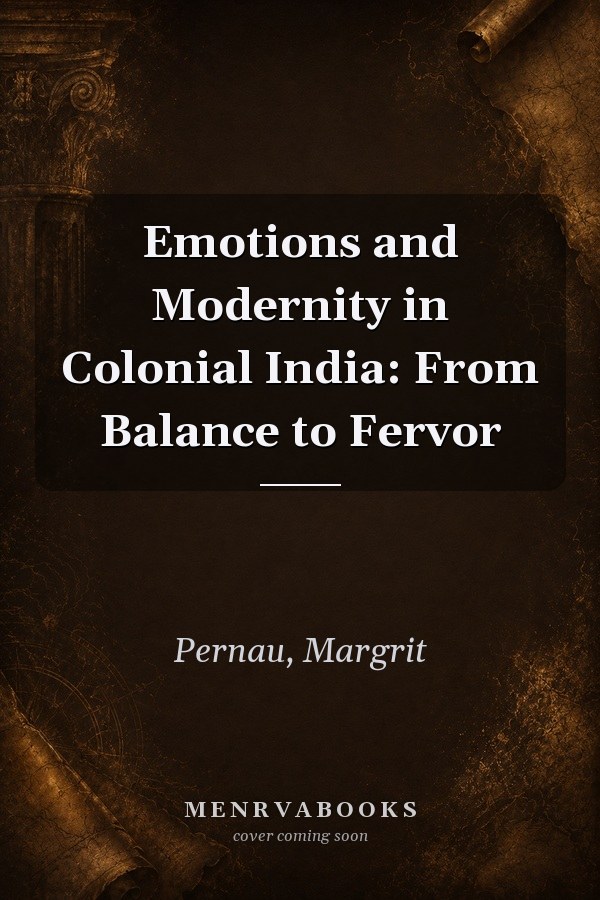
Emotions and Modernity in Colonial India: From Balance to Fervor
0
0
As an Amazon Associate and affiliate partner, Menrva Books earns from qualifying purchases. Learn more
Author Description
Introduction -- 1857: Violence And Emotional Mobilization -- Emotion Concepts: From Aristotelian Legacy To Modern Journalism -- Tahzib Ul Akhlaq: The Negotiation Of The Civilizing Mission -- The Begams Of Bhopal: Three Generations Of Advice To Women -- Journals For Children: Emotions And Entertainment -- Ashraf 'ali' Thanavi: Sermons And Pious Feelings -- Abdul Majid Daryabadi: The Translation Of Psychology -- Nostalgia: Tears Of Blood For A Lost World -- Kanpur 1913: Feeling Passionately For The House Of God -- Conclustion -- Appendix: Emotions In South Asian Historiography And Anthropology. Margrit Pernau. Includes Bibliographical References And Index. Electronic Reproduction. Oxford Available Via World Wide Web.
Menrva's Summary
THE THESIS
How did the conceptualization and expression of human emotions shift in colonial India as the region transitioned from traditional frameworks to modern political and social structures? Margrit Pernau, a senior researcher at the Max Planck Institute for Human Development, utilizes a historical and anthropological lens to examine the transformation of emotional norms in India between the mid-19th and early 20th centuries. By analyzing a wide array of primary sources, including journals, advice literature, and sermons, she argues that the colonial encounter necessitated a reconfiguration of emotional life, moving from a focus on balance and moderation toward a more fervent, mobilized public sentiment.
THE SCOPE MAP
What You Will Find
- Analysis of emotional shifts following the 1857 uprising.
- Examination of gendered advice literature, specifically the writings of the Begams of Bhopal.
- Study of the influence of modern journalism and psychology on traditional emotional concepts.
- Investigation into the role of religious sermons in shaping pious feelings.
Scope Limits
- The text focuses primarily on the Muslim elite and middle-class perspectives in North India.
- It does not provide a comprehensive survey of emotional history across all Indian castes or religious demographics.
THE AUTHORITY PERSPECTIVE
Scholars in South Asian historiography recognize this work as a significant contribution to the burgeoning field of the history of emotions. Readers frequently note the academic density of the prose and the author's meticulous use of vernacular sources to bridge the gap between colonial policy and lived experience.
Page Count:
0
Publication Date:
1900-01-01
Publisher:
Oxford University Press,
ISBN-10:
019099083X
ISBN-13:
9780190990831
History
Sociology
History of Emotions
Colonial India
Emotions
Asian Studies
Cultural History
Community Tags
Similar Books