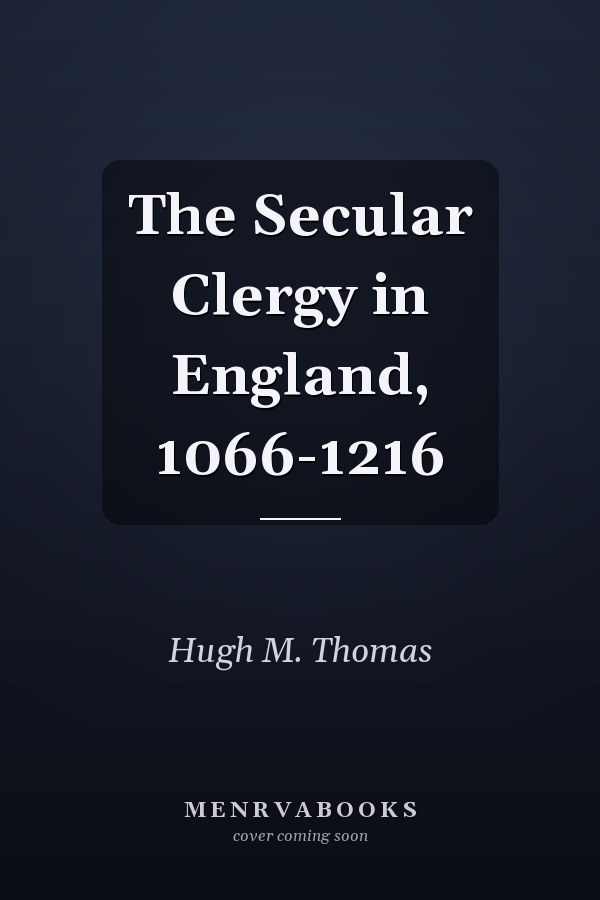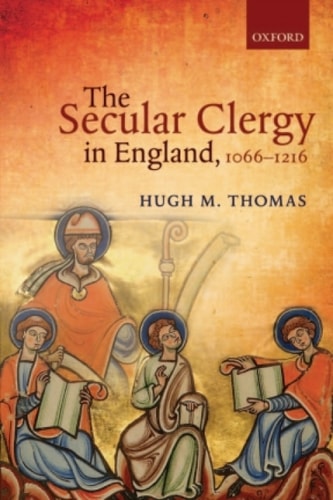
The Secular Clergy in England, 1066-1216
0
0
As an Amazon Associate and affiliate partner, Menrva Books earns from qualifying purchases. Learn more
Author Description
The secular clergy - priests and other clerics outside of monastic orders - were among the most influential and powerful groups in European society during the central Middle Ages. The secular clergy got their title from the Latin word for world, saeculum, and secular clerics kept the Church running in the world beyond the cloister wall, with responsibility for the bulk of pastoral care and ecclesiastical administration. This gave them enormous religious influence, although they were considered too worldly by many contemporary moralists - trying, for instance, to oppose the elimination of clerical marriage and concubinage. Although their worldliness created many tensions, it also gave the secular clergy much worldly influence. Contemporaries treated elite secular clerics as equivalent to knights, and some were as wealthy as minor barons. Secular clerics had a huge role in the rise of royal bureaucracy, one of the key historical developments of the period. They were instrumental to the intellectual and cultural flowering of the twelfth century, the rise of the schools, the creation of the book trade, and the invention of universities. They performed music, produced literature in a variety of genres and languages, and patronized art and architecture. Indeed, this volume argues that they contributed more than any other group to the Twelfth-Century Renaissance. Yet the secular clergy as a group have received almost no attention from scholars, unlike monks, nuns, or secular nobles. In The Secular Clergy in England, 1066-1216, Hugh Thomas aims to correct this deficiency through a major study of the secular clergy below the level of bishop in England from 1066 to 1216.
Menrva's Summary
THE THESIS
This work investigates the critical role and societal influence of the secular clergy in England between 1066 and 1216, arguing that they were the primary drivers of the Twelfth-Century Renaissance. Hugh M. Thomas, a historian specializing in medieval England, utilizes a wide range of ecclesiastical and administrative records to reconstruct the lives of priests and clerics operating outside monastic orders. The book challenges the historical tendency to focus on monks and nobility, positing that the secular clergy were central to the development of royal bureaucracy, intellectual life, and cultural production.
THE SCOPE MAP
What You Will Find
- Analysis of the secular clergy's role in pastoral care and ecclesiastical administration.
- Examination of the tension between clerical worldliness and religious reform movements.
- Documentation of the clergy's involvement in the rise of universities and the book trade.
- Evidence regarding the socio-economic status of elite clerics compared to the knightly class.
Scope Limits
- The study focuses specifically on England during the period of 1066 to 1216.
- The analysis excludes bishops, focusing instead on the secular clergy below the episcopal level.
THE AUTHORITY PERSPECTIVE
Scholars recognize this text as a significant contribution to medieval studies for its focus on an often-overlooked demographic. Readers frequently note the academic rigor and the depth of the archival research presented throughout the volume.
Page Count:
442
Publication Date:
2014-01-01
Publisher:
OUP Oxford
ISBN-10:
0191007013
ISBN-13:
9780191007019
History
Social History
Church History
European History
England
Study & Teaching