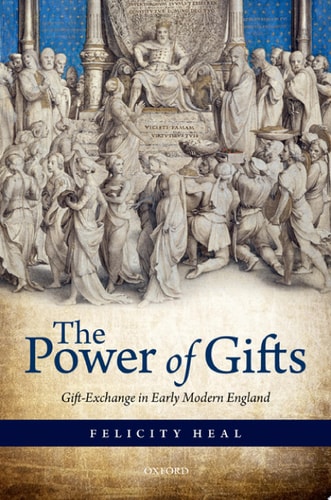
The Power of Gifts: Gift Exchange in Early Modern England
0
0
As an Amazon Associate and affiliate partner, Menrva Books earns from qualifying purchases. Learn more
Author Description
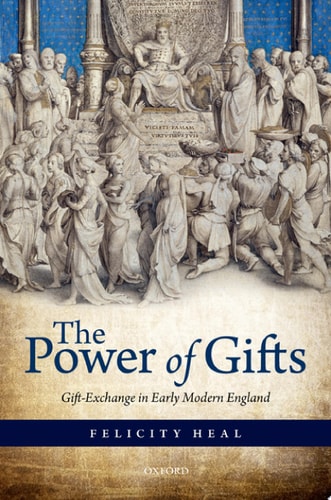
Gifts are always with us: we use them positively to display affection and show gratitude for favours; we suspect that others give and accept them as douceurs and bribes. The gift also performed these roles in early modern English culture: and assumed a more significant role because networks of informal support and patronage were central to social and political behaviour. Favours, and their proper acknowledgement, were preoccupations of the age of Erasmus, Shakespeare, and Hobbes. As in modern society, giving and receiving was complex and full of the potential for social damage. 'Almost nothing', men of the Renaissance learned from that great classical guide to morality, Lucius Annaeus Seneca, 'is more disgraceful than the fact that we do not know how either to give or receive benefits'. The Power of Gifts is about those gifts and benefits - what they were, and how they were offered and received in the sixteenth and seventeenth centuries. It shows that the mode of giving, as well as what was given, was crucial to social bonding and political success. The volume moves from a general consideration of the nature of the gift to an exploration of the politics of giving. In the latter chapters some of the well-known rituals of English court life - the New Year ceremony, royal progresses, diplomatic missions - are viewed through the prism of gift-exchange. Gifts to monarchs or their ministers could focus attention on the donor, those from the crown could offer some assurance of favour. These fundamentals remained the same throughout the century and a half before the Civil War, but the attitude of individual monarchs altered specific behaviour. Elizabeth expected to be wooed with gifts and dispensed benefits largely for service rendered, James I modelled giving as the largesse of the Renaissance prince, Charles I's gift-exchanges focused on the art collecting of his coterie. And always in both politics and the law courts there was the danger that gifts would be corroded, mor
Menrva's Summary
THE THESIS
This book investigates the complex social and political functions of gift exchange in early modern England, questioning how the act of giving shaped power dynamics and interpersonal relationships. Felicity Heal, a distinguished historian of early modern Britain, utilizes a wide array of primary sources, including personal correspondence, court records, and diplomatic accounts, to analyze the mechanics of patronage and social obligation. She argues that the ritual of the gift was not merely a gesture of affection but a sophisticated instrument of political negotiation and social maintenance during the sixteenth and seventeenth centuries.
THE SCOPE MAP
What You Will Find
- Analysis of gift-giving rituals in the English court, including New Year ceremonies and royal progresses.
- Examination of the transition in gift-exchange styles from the reign of Elizabeth I through Charles I.
- Exploration of the intersection between informal patronage networks and formal political power.
- Case studies on the role of gifts in legal and diplomatic contexts.
Scope Limits
- The study focuses primarily on the period leading up to the English Civil War and does not extend into the later seventeenth century.
- The analysis is centered on English culture and does not provide a comparative study of continental European gift-exchange practices.
THE AUTHORITY PERSPECTIVE
Scholars and historians frequently cite this work as a foundational text for understanding the social fabric of early modern England. Readers often note the academic density of the prose, which provides a rigorous examination of historical patronage systems.
Page Count:
272
Publication Date:
2014-01-01
Publisher:
OUP Oxford
ISBN-10:
0191020133
ISBN-13:
9780191020131
History
Anthropology
Political History
Special Topics
Early Modern
Social History
Community Tags
Other Editions(2)
Similar Books









Reader Comments
Share Your Thoughts
No comments yet. Be the first to share your thoughts!