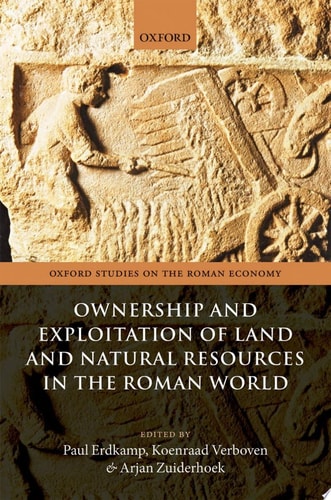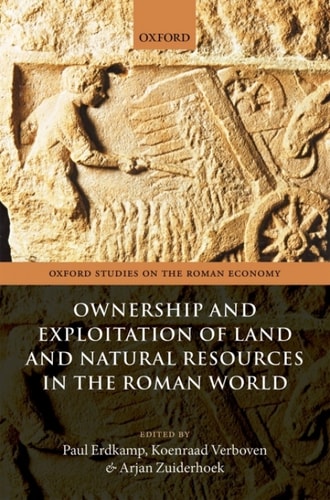
Ownership and Exploitation of Land and Natural Resources in the Roman World
0
0
As an Amazon Associate and affiliate partner, Menrva Books earns from qualifying purchases. Learn more
Author Description
Explanation of the success and failure of the Roman economy is one of the most important problems in economic history. As an economic system capable of sustaining high production and consumption levels, it was unparalleled until the early modern period. This volume focuses on how the institutional structure of the Roman Empire affected economic performance both positively and negatively. An international range of contributors offers a variety of approaches that together enhance our understanding of how different ownership rights and various modes of organization and exploitation facilitated or prevented the use of land and natural resources in the production process. Relying on a large array of resources - literary, legal, epigraphic, papyrological, numismatic, and archaeological - chapters address key questions regarding the foundations of the Roman Empire's economic system. Questions of growth, concentration and legal status of property (private, public, or imperial), the role of the state, content and limitations of rights of ownership, water rights and management, exploitation of indigenous populations, and many more receive new and original analyses that make this book a significant step forward to understanding what made the economic achievements of the Roman empire possible.
Menrva's Summary
THE THESIS
This volume investigates how the institutional frameworks governing land ownership and resource exploitation dictated the economic performance and sustainability of the Roman Empire. The editors, Arjan Zuiderhoek, Koenraad Verboven, and Paul Erdkamp, curate a collection of essays from international scholars to analyze the structural foundations of Roman productivity. By synthesizing diverse evidence, the authors argue that the specific legal and social arrangements surrounding property rights were the primary determinants of the empire's economic successes and failures.
THE SCOPE MAP
What You Will Find
- Analysis of property rights including private, public, and imperial land holdings.
- Examination of water management systems and resource extraction methodologies.
- Discussion of the exploitation of indigenous populations within the imperial economic model.
- Integration of literary, legal, epigraphic, papyrological, numismatic, and archaeological data.
Scope Limits
- The text focuses primarily on institutional and economic structures rather than military or political history.
- It does not provide a comprehensive narrative history of the Roman Empire, but rather thematic economic case studies.
THE AUTHORITY PERSPECTIVE
Scholars and historians identify this work as a rigorous contribution to the Oxford Studies on the Roman Economy series, noting its high level of academic detail. Experts frequently highlight the volume for its interdisciplinary methodology, which successfully bridges the gap between legal theory and archaeological evidence.
Page Count:
440
Publication Date:
2015-01-01
Publisher:
OUP Oxford
ISBN-10:
0191044733
ISBN-13:
9780191044731
History
Land economics
Ancient History
Economic History
Roman Empire
Land Use