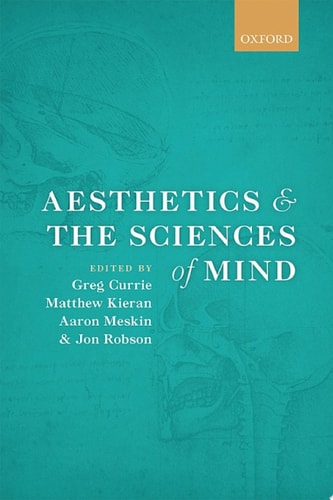
Aesthetics and the Sciences of Mind
0
0
As an Amazon Associate and affiliate partner, Menrva Books earns from qualifying purchases. Learn more
Author Description
Through much of the twentieth century, philosophical thinking about works of art, design, and other aesthetic products has emphasized intuitive and reflective methods, often tied to the idea that philosophy's business is primarily to analyze concepts. This 'philosophy from the armchair' approach contrasts with methods used by psychologists, sociologists, evolutionary thinkers, and others who study the making and reception of the arts empirically. How far should philosophers be sensitive to the results of these studies? Is their own largely a priori method basically flawed? Are their views on aesthetic value, interpretation, imagination, and the emotions of art to be rethought in the light of best science? The essays in this volume seek answers to these questions, many through detailed studies of problems traditionally regarded as philosophical but where empirical inquiry seems to be shedding interesting light. No common view is looked for or found in this volume: a number of authors argue that the current enthusiasm for scientific approaches to aesthetics is based on a misunderstanding of the philosophical enterprise and sometimes on misinterpretation of the science; others suggest various ways that philosophy can and should accommodate and sometimes yield to the empirical approach. The editors provide a substantial introduction which sets the scene historically and conceptually before summarizing the claims and arguments of the essays.
Menrva's Summary
THE THESIS
This volume investigates the extent to which philosophical aesthetics should integrate empirical findings from the cognitive and social sciences into its traditional conceptual framework. The editors, Aaron Meskin, Greg Currie, and Matthew Kieran, curate a collection of essays that challenge the long-standing tradition of armchair philosophy. By examining the intersection of aesthetic theory and scientific inquiry, the contributors evaluate whether traditional philosophical methods remain sufficient or if they require revision in light of contemporary psychological and evolutionary research.
THE SCOPE MAP
What You Will Find
- Critical analysis of the tension between a priori philosophical methods and empirical research.
- Investigations into aesthetic value, interpretation, imagination, and the emotions of art.
- A comprehensive introduction that contextualizes the historical and conceptual divide between philosophy and the sciences.
Scope Limits
- The volume does not propose a unified theory or consensus on the relationship between aesthetics and science.
- It does not provide a comprehensive survey of all scientific studies related to art, focusing instead on specific philosophical problems.
THE AUTHORITY PERSPECTIVE
Experts recognize this collection as a significant contribution to the ongoing debate regarding the naturalization of aesthetics. Readers frequently note the academic density of the prose, which serves as a rigorous resource for scholars and advanced students navigating the intersection of philosophy and cognitive science.
Page Count:
272
Publication Date:
2014-01-01
Publisher:
OUP Oxford
ISBN-10:
0191046094
ISBN-13:
9780191046094
Philosophy
Art psychology
Aesthetics
Philosophy of
Community Tags
Similar Books