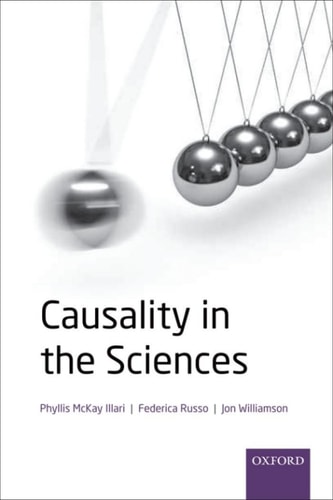
Causality in the Sciences
0
0
As an Amazon Associate and affiliate partner, Menrva Books earns from qualifying purchases. Learn more
Author Description
There is a need for integrated thinking about causality, probability and mechanisms in scientific methodology. Causality and probability are long-established central concepts in the sciences, with a corresponding philosophical literature examining their problems. On the other hand, the philosophical literature examining mechanisms is not long-established, and there is no clear idea of how mechanisms relate to causality and probability. But we need some idea if we are to understand causal inference in the sciences: a panoply of disciplines, ranging from epidemiology to biology, from econometrics to physics, routinely make use of probability, statistics, theory and mechanisms to infer causal relationships. These disciplines have developed very different methods, where causality and probability often seem to have different understandings, and where the mechanisms involved often look very different. This variegated situation raises the question of whether the different sciences are really using different concepts, or whether progress in understanding the tools of causal inference in some sciences can lead to progress in other sciences. The book tackles these questions as well as others concerning the use of causality in the sciences.
Menrva's Summary
THE THESIS
This work investigates whether the disparate scientific disciplines utilize a unified concept of causality or if their methodologies are fundamentally distinct. Phyllis McKay Illari, alongside contributors, examines the intersection of probability, statistical inference, and mechanistic explanation across fields such as epidemiology, biology, and physics. The text argues that integrated thinking is necessary to reconcile how different sciences identify and validate causal relationships.
THE SCOPE MAP
What You Will Find
- Comparative analysis of causal inference across epidemiology, biology, econometrics, and physics
- Theoretical frameworks for relating mechanisms to probability and statistics
- Examination of whether methodological progress in one field can be applied to others
Scope Limits
- Does not provide a singular, universal definition of causality applicable to all phenomena
- Does not serve as a practical manual for statistical software or data analysis
THE AUTHORITY PERSPECTIVE
Experts identify this text as a significant contribution to the philosophy of science, specifically for its attempt to bridge the gap between mechanistic and probabilistic accounts of causation. Readers frequently note the academic density of the prose, which is best suited for researchers and students familiar with the philosophy of scientific methodology.
Page Count:
816
Publication Date:
2011-01-01
Publisher:
OUP Oxford
ISBN-10:
0191060321
ISBN-13:
9780191060328
Philosophy
Epistemology
Logic
Philosophy of
Statistics
Community Tags
Similar Books