Beyond Greece and Rome
0
0
As an Amazon Associate and affiliate partner, Menrva Books earns from qualifying purchases. Learn more
Author Description
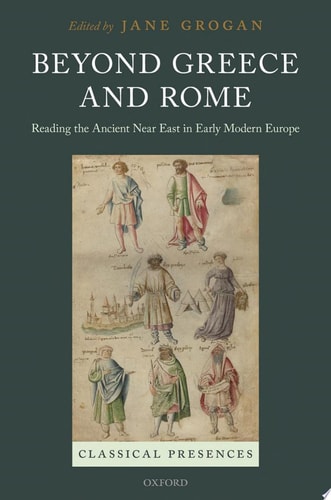
Though The Subject Of Classical Reception In Early Modern Europe Is A Familiar One, Modern Scholarship Has Tended To Assume The Dominance Of Greece And Rome In Engagements With The Classical World During That Period. The Essays In This Volume Aim To Challenge This Prevailing View By Arguing For The Significance And Familiarity Of The Ancient Near East To Early Modern Europe, Establishing The Diversity And Expansiveness Of The Classical World Known To Authors Like Shakespeare And Montaigne In What We Now Call The 'global Renaissance'. However, Global Renaissance Studies Has Tended To Look Away From Classical Reception, Exacerbating The Blind Spot Around The Significance Of The Ancient Near East For Early Modern Europe. Yet This Wider Classical World Supported New Modes Of Humanist Thought And Unprecedented Cross-cultural Encounters, As Well As Informing New Forms Of Writing, Such As Travel Writing And Antiquarian Treatises; In Many Cases, And Befitting Its Herodotean Origins, The Ancient Near East Raises Questions Of Travel, Empire, Religious Diversity, Cultural Relativism, And The History Of European Culture Itself In Ways That Prompted Detailed, Engaging, And Functional Responses By Early Modern Readers And Writers. Bringing Together A Range Of Approaches From Across The Fields Of Classical Studies, History, And Comparative Literature, This Volume Seeks Both To Emphasize The Transnational, Interdisciplinary, And Interrogative Nature Of Classical Reception, And To Make A Compelling Case For The Continued Relevance Of The Texts, Concepts, And Materials Of The Ancient Near East, Specifically, To Early Modern Culture And Scholarship.
Menrva's Summary
THE THESIS
This volume investigates the extent to which early modern European intellectual life was shaped by the ancient Near East, challenging the traditional academic focus on Greco-Roman dominance. Jane Grogan and a collection of contributors argue that the classical world known to figures like Shakespeare and Montaigne was far more expansive than previously acknowledged. By integrating classical reception with global Renaissance studies, the text posits that Near Eastern history and culture provided a critical framework for early modern developments in travel writing, religious discourse, and cultural relativism.
THE SCOPE MAP
What You Will Find
- Analysis of the 'global Renaissance' and its engagement with non-Greco-Roman antiquity
- Examination of travel writing and antiquarian treatises as vehicles for cultural exchange
- Interdisciplinary methodologies bridging classical studies, history, and comparative literature
Scope Limits
- The text does not provide a comprehensive history of the ancient Near East itself, focusing instead on its reception in the early modern period
- It does not attempt to diminish the importance of Greece and Rome, but rather to expand the context of classical influence
THE AUTHORITY PERSPECTIVE
Scholars in the field identify this work as a significant intervention in classical reception studies, noting its success in bridging the gap between Renaissance literature and ancient history. The text is frequently cited for its academic rigor and its ability to synthesize complex interdisciplinary perspectives for a specialized audience.
Page Count:
399
Publication Date:
2020-01-01
Publisher:
Oxford University Press
ISBN-10:
0191079839
ISBN-13:
9780191079832
History
Comparative
Early Modern
Cultural History
Community Tags
Similar Books