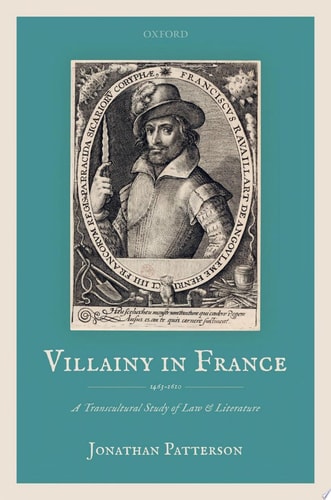
Villainy in France (1463-1610)
0
0
As an Amazon Associate and affiliate partner, Menrva Books earns from qualifying purchases. Learn more
Author Description
Obscene Poetry, Servants' Slanders Against Their Masters, The Diabolical Acts Of Those Who Committed Massacre And Regicide. This Is A Book About The Harmful, Outward Manifestation Of Inner Malice—villainy—in French Culture (1463-1610). In Pre-modern France, Villainous Offences Were Countered, If Never Fully Contained, By Intersecting Legal And Literary Responses. Combining The Methods Of Legal Anthropology With Literary And Historical Analysis, This Study Examines Villainy Across Juridical Documents, Criminal Records, And Literary Texts. Whilst Few People Obtained Justice Through The Law, Many Pursued Out-of-court Settlements Of One Kind Or Another. Literary Texts Commemorated Villainies Both Fictitious And Historical; Literature Sometimes Instantiated The Process Of Redress, And Enabled The Transmission Of Conflicts From One Context To Another. Villainy In France Follows This Overflowing Current Of Pre-modern French Culture, Examining Its Impact Within France And Across The English Channel. Scholars And Cultural Critics Of The Anglophone World Have Long Been Fascinated By Villainy And Villains. This Book Reveals The Subject's Significant 'frenchness' And Establishes A Transcultural Approach To It In Law And Literature. In This Study, Villainy's Particular Significance Emerges Through Its Representation In Authors Remembered For Their Less-than Respectable, Even Criminal, Activities: François Villon, Clément Marot, François Rabelais, Pierre De L'estoile, Christopher Marlowe, Ben Jonson, John Marston, And George Chapman. Villainy In France Affords Legal-literary Comparison Of These Authors Alongside Many Of Their Lesser-known Contemporaries; In So Doing, It Reinterprets French Conflicts Within A Wider European Context, From The Mid-fifteenth Century To The Early Seventeenth Century.
Menrva's Summary
THE THESIS
This study investigates how the concept of villainy functioned as a cultural and legal construct in France between 1463 and 1610. Jonathan Patterson, utilizing a methodology that bridges legal anthropology with literary and historical analysis, argues that villainy was not merely a criminal act but a manifestation of inner malice that required complex social, legal, and literary responses. By examining a diverse array of sources, the author demonstrates how pre-modern French society attempted to manage these transgressions through both formal judicial systems and informal, out-of-court settlements.
THE SCOPE MAP
What You Will Find
- Analysis of criminal records, juridical documents, and literary texts from the mid-fifteenth to early seventeenth centuries.
- A comparative study of French and English literary representations of villainy.
- Examination of works by authors including François Villon, Clément Marot, François Rabelais, and Christopher Marlowe.
Scope Limits
- The study focuses primarily on the cultural and legal manifestations of villainy rather than providing a comprehensive history of French criminal law.
- The analysis is restricted to the specific timeframe of 1463 to 1610.
THE AUTHORITY PERSPECTIVE
Scholars in the field of early modern studies recognize this work as a significant contribution to the transcultural understanding of legal and literary intersections. Readers frequently note the academic density of the prose, which serves as a rigorous examination for those interested in the evolution of criminal discourse in pre-modern Europe.
Page Count:
320
Publication Date:
2021-01-01
Publisher:
Oxford University Press
ISBN-10:
0192576283
ISBN-13:
9780192576286
History
Legal History
Early Modern
Literary Criticism
French History
Cultural History
Community Tags
Similar Books