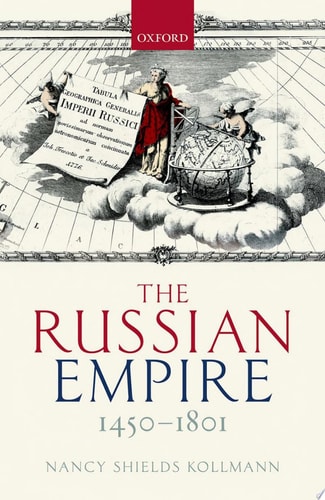
The Russian Empire 1450-1801
0
0
As an Amazon Associate and affiliate partner, Menrva Books earns from qualifying purchases. Learn more
Author Description
Modern Russian Identity And Historical Experience Has Been Largely Shaped By Russia's Imperial Past: An Empire That Was Founded In The Early Modern Era And Endures In Large Part Today. The Russian Empire 1450-1801 Surveys How The Areas That Made Up The Empire Were Conquered And How They Were Governed. It Considers The Russian Empire A 'eurasian Empire', Characterized By A 'politics Of Difference': The Rulers And Their Elites At The Center Defined The State's Needs Minimally - With Control Over Defense, Criminal Law, Taxation, And Mobilization Of Resources - And Otherwise Tolerated Local Religions, Languages, Cultures, Elites, And Institutions. The Center Related To Communities And Religions Vertically, According Each A Modicum Of Rights And Autonomies, But Didn't Allow Horizontal Connections Across Nobilities, Townsmen, Or Other Groups Potentially With Common Interests To Coalesce. Thus, The Russian Empire Was Multi-ethnic And Multi-religious; Nancy Kollmann Gives Detailed Attention To The Major Ethnic And Religious Groups, And Surveys The Government's Strategies Of Governance - Centralized Bureaucracy, Military Reform, And A Changed Judicial System. The Volume Pays Particular Attention To The Dissemination Of A Supranational Ideology Of Political Legitimacy In A Variety Of Media - Written Sources And Primarily Public Ritual, Painting, And Particularly Architecture. Beginning With Foundational Features, Such As Geography, Climate, Demography, And Geopolitical Situation, The Russian Empire 1450-1801 Explores The Empire's Primarily Agrarian Economy, Serfdom, Towns And Trade, As Well As The Many Religious Groups - Primarily Orthodoxy, Islam, And Buddhism. It Tracks The Emergence Of An 'imperial Nobility' And A National Self-consciousness That Was, By The End Of The Eighteenth Century, Distinctly Imperial, Embracing The Diversity Of The Empire's Many Peoples And Cultures.
Menrva's Summary
THE THESIS
This work investigates how the Russian Empire established and maintained its identity as a multi-ethnic and multi-religious Eurasian power between 1450 and 1801. Nancy Shields Kollmann, a specialist in early modern Russian history, utilizes a framework of 'politics of difference' to analyze how the imperial center managed diverse territories. She argues that the state prioritized central control over defense and taxation while allowing significant local autonomy, effectively preventing the formation of horizontal alliances among disparate groups.
THE SCOPE MAP
What You Will Find
- Analysis of the 'politics of difference' in governance and administration.
- Examination of the dissemination of political legitimacy through architecture, ritual, and visual media.
- Surveys of the agrarian economy, serfdom, and the roles of Orthodoxy, Islam, and Buddhism.
- Documentation of the emergence of an imperial nobility and a distinct national self-consciousness.
Scope Limits
- The analysis is strictly bounded by the years 1450 to 1801.
- The text focuses primarily on state-level governance and elite structures rather than grassroots social history.
THE AUTHORITY PERSPECTIVE
Scholars and students of Russian history frequently cite this volume as a foundational text for understanding the structural complexities of the early modern Russian state. Readers often note the academic density of the prose, which provides a rigorous examination of imperial administrative strategies and cultural integration.
Page Count:
512
Publication Date:
2016-01-01
Publisher:
Oxford University Press
ISBN-10:
0191082694
ISBN-13:
9780191082696
History
History - Modern
Imperial History
Sociology
Russian History
Community Tags
Other Editions(3)
Similar Books

Reader Comments
Share Your Thoughts
No comments yet. Be the first to share your thoughts!