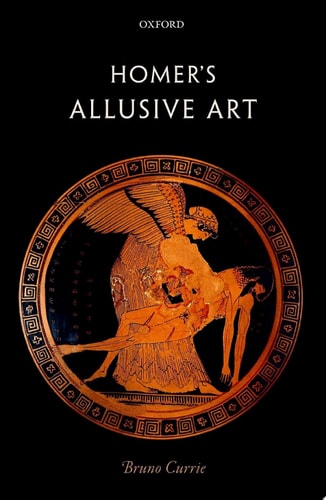
Homer's Allusive Art
0
0
As an Amazon Associate and affiliate partner, Menrva Books earns from qualifying purchases. Learn more
Author Description
What kind of allusion is possible in a poetry derived from a centuries-long oral tradition, and what kind of oral-derived poetry are the Homeric epics? Comparison of Homeric epic with South Slavic heroic song has suggested certain types of answers to these questions, yet the South Slavic paradigm is neither straightforward in itself nor necessarily the only pertinent paradigm: Augustan Latin poetry uses many sophisticated and highly self-conscious techniques of allusion which can, this book contends, be suggestively paralleled in Homeric epic, and some of the same techniques of allusion can be found in Near Eastern poetry of the third and second millennia BC. By attending to these various paradigms, this challenging study argues for a new understanding of Homeric allusion and its place in literary history, broaching the question of whether there can have been historical continuity in a poetics of allusion stretching from the Mesopotamian epic of Gilgamesh, via the Iliad and Odyssey, to the Aeneid and Metamorphoses, despite the enormous disparities of time and place and of language and culture, including those represented by the cuneiform tablet, the papyrus roll, and by an oral performance culture. The fundamental methodological problems are explored through a series of interlocking case studies, treating of how the Odyssey conceivably alludes to the Iliad and also to earlier poetry on Odysseus' homecoming, the Iliad to earlier poetry on the Ethiopian hero Memnon, the Homeric Hymn to Demeter to earlier poetry on Hades' abduction of Persephone, and early Greek epic to Mesopotamian mythological poetry, pre-eminently the Babylonian epic of Gilgamesh.
Menrva's Summary
THE THESIS
This study investigates the nature of allusion within the oral tradition of Homeric epic by comparing it to techniques found in South Slavic heroic song, Augustan Latin poetry, and ancient Near Eastern literature. Bruno Currie, a scholar of classical literature, utilizes a comparative methodology to challenge traditional views on the development of epic poetry. He argues that sophisticated, self-conscious allusion exists within the Homeric corpus, suggesting a potential historical continuity in poetic techniques that spans from Mesopotamian traditions to the Roman era.
THE SCOPE MAP
What You Will Find
- Comparative analysis of Homeric epic, South Slavic heroic song, and Augustan Latin poetry.
- Examination of intertextual relationships between the Iliad, the Odyssey, and earlier mythological traditions.
- Exploration of the influence of Mesopotamian literature, specifically the Epic of Gilgamesh, on early Greek epic.
Scope Limits
- The study does not provide a comprehensive history of all oral traditions.
- It focuses primarily on specific case studies rather than an exhaustive survey of every extant ancient text.
THE AUTHORITY PERSPECTIVE
Scholars recognize this work as a rigorous contribution to the field of Homeric studies, particularly for its interdisciplinary approach to oral poetics. Readers frequently note the academic density of the prose, which requires a strong background in classical philology to fully appreciate the author's arguments.
Page Count:
357
Publication Date:
2016-01-01
Publisher:
OUP Oxford
ISBN-10:
0191081507
ISBN-13:
9780191081507
Poetry
History
Literary Criticism
Latin poetry
Ancient History
Comparative
Community Tags
Other Editions(3)


Similar Books


Reader Comments
Share Your Thoughts
No comments yet. Be the first to share your thoughts!