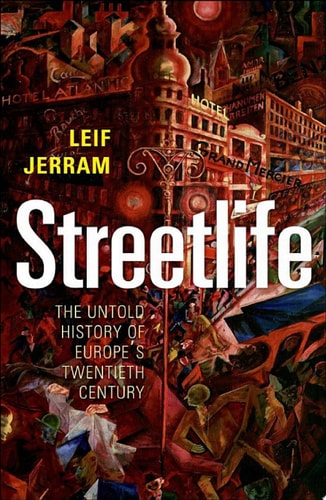
Streetlife: The Untold History of Europe's Twentieth Century
0
0
As an Amazon Associate and affiliate partner, Menrva Books earns from qualifying purchases. Learn more
Author Description
The twentieth century in Europe was an urban century: it was shaped by life in, and the view from, the street. Women were not liberated in legislatures, but liberated themselves in factories, homes, nightclubs, and shops. Lenin, Hitler, and Mussolini made themselves powerful by making cities ungovernable with riots rampaging through streets, bars occupied one-by-one. New forms of privacy and isolation were not simply a by-product of prosperity, but because people planned new ways of living, new forms of housing in suburbs and estates across the continent. Our proudest cultural achievements lie not in our galleries or state theatres, but in our suburban TV sets, the dance halls, pop music played in garages, and hip hop sung on our estates. In Streetlife, Leif Jerram presents a totally new history of the twentieth century, with the city at its heart, showing how everything distinctive about the century, from revolution and dictatorship to sexual liberation, was fundamentally shaped by the great urban centres which defined it.
Menrva's Summary
THE THESIS
This work investigates how the rapid urbanization of Europe during the twentieth century served as the primary catalyst for the continent's political, social, and cultural transformations. Leif Jerram, a historian specializing in urban history and European identity, utilizes a synthesis of archival research and social analysis to argue that the street, rather than the legislature, was the true site of historical change. He posits that the defining movements of the era—from political revolution to the evolution of private life—were fundamentally constructed within the physical and social constraints of the modern city.
THE SCOPE MAP
What You Will Find
- Analysis of urban planning and its impact on social behavior and privacy.
- Examination of how political figures like Lenin and Hitler leveraged urban unrest to consolidate power.
- Exploration of cultural shifts in music, dance, and domestic life within suburban and urban environments.
Scope Limits
- The text focuses primarily on urban centers and suburban developments, providing less coverage of rural or agrarian experiences.
- It prioritizes social and cultural history over traditional diplomatic or military history.
THE AUTHORITY PERSPECTIVE
Historians and urban scholars frequently note the book's success in shifting the focus of twentieth-century history away from state-level politics toward the lived experience of the urban populace. Experts highlight this as a useful text for understanding the intersection of architecture, social movements, and political power in modern Europe.
Page Count:
487
Publication Date:
2011-01-01
Publisher:
OUP Oxford
ISBN-10:
0191501182
ISBN-13:
9780191501180
History
Cultural History
Cities And Towns
Europe
European History
Twentieth Century
Social History
Urban Studies