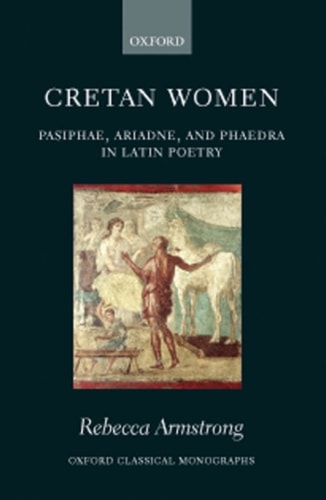
Cretan Women: Pasiphae, Ariadne, and Phaedra in Latin Poetry
0
0
As an Amazon Associate and affiliate partner, Menrva Books earns from qualifying purchases. Learn more
Author Description
In this detailed study of the representations of Pasiphae, Ariadne, and Phaedra in Latin poetry, Rebecca Armstrong investigates both the literary history of the myths (the Greek roots, the interactions between Roman versions) and their cultural resonance. In addition to close readings of the major treatments of each woman's story (in Catullus, Virgil, Ovid, and Seneca), she offers extended thematic explorations of the importance of memory, wildness, and morality in the myths. By extending the net to encompass three women (all from the same ill-fated family), the book gives a clear picture of the complexity and fascinating interconnectedness of myths and texts in Ancient Rome.
Menrva's Summary
THE THESIS
This study investigates how the figures of Pasiphae, Ariadne, and Phaedra function as interconnected symbols within the framework of Latin poetry. Rebecca Armstrong, a scholar of classical literature, utilizes a comparative methodology to analyze the evolution of these myths from their Greek origins to their specific manifestations in Roman texts. By examining the familial lineage of these women, the author argues that their recurring presence in poetry serves as a vital mechanism for exploring Roman cultural anxieties regarding morality, memory, and the wild.
THE SCOPE MAP
What You Will Find
- Comparative analysis of Pasiphae, Ariadne, and Phaedra across multiple Latin poets.
- Close readings of primary texts from Catullus, Virgil, Ovid, and Seneca.
- Thematic exploration of the concepts of wildness, memory, and morality in antiquity.
Scope Limits
- The study focuses primarily on Latin poetic representations rather than broader archaeological or iconographic evidence.
- The analysis is restricted to the specific lineage of the Cretan royal family as depicted in the selected Roman literary canon.
THE AUTHORITY PERSPECTIVE
Scholars recognize this monograph as a rigorous contribution to the study of Roman reception of Greek myth. Readers frequently note the academic density of the prose, which is intended for specialists in classical philology and literary history.
Page Count:
362
Publication Date:
2006-01-01
Publisher:
OUP Oxford
ISBN-10:
0191515817
ISBN-13:
9780191515811
English & College Success
Latin poetry
Gender Studies
Ancient History
English
Mythology
Literary Criticism