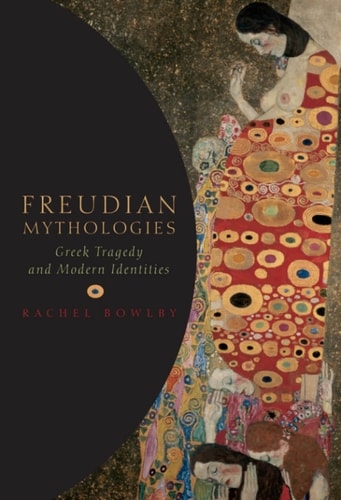
Freudian Mythologies: Greek Tragedy and Modern Identities
0
0
As an Amazon Associate and affiliate partner, Menrva Books earns from qualifying purchases. Learn more
Author Description
More than a hundred years ago, Freud made a new mythology by revising an old one: Oedipus, in Sophocles' tragedy the legendary perpetrator of shocking crimes, was an Everyman whose story of incest and parricide represented the fulfilment of universal and long forgotten childhood wishes. The Oedipus complex - child, mother, father - suited the nuclear families of the mid-twentieth century. But a century after the arrival of the psychoanalytic Oedipus, it might seem that modern lives are very much changed. Typical family formations and norms of sexual attachment are changing, while the conditions of sexual difference, both biologically and socially, have undergone far-reaching modifications. Today, it is possible to choose and live subjective stories that the first psychoanalytic patients could only dream of. Different troubles and enjoyments are speakable and unspeakable; different selves are rejected, discovered, or sought. Many kinds of hitherto unrepresented or unrepresentable identity have entered into the ordinary surrounding stories through which children and adults find their bearings in the world, while others have become obsolete. Biographical narratives that would previously have seemed unthinkable or incredible--'a likely story!'--have acquired the straightforward plausibility of a likely story. This book takes two Freudian routes to think about some of the present entanglements of identity. First, it follows Freud in returning to Greek tragedies - Oedipus and others - which may now appear strikingly different in the light of today's issues of family and sexuality. And second, it re-examines Freud's own theories from these newer perspectives, drawing out different strands of his stories of how children develop and how people change (or don't). Both kinds of mythology, the classical and the theoretical, may now, in their difference, illuminate some of the forming stories of our contemporary world of serial families, multiple sexualities, and new reproductiv
Menrva's Summary
THE THESIS
This book investigates how Freudian psychoanalytic theories, particularly those rooted in Greek tragedy, remain relevant or require revision in the context of contemporary family structures and evolving sexual identities. Rachel Bowlby, a scholar of literature and psychoanalysis, utilizes a dual-methodological approach to bridge classical narratives with modern identity formation. She argues that while Freud's original Oedipal framework was tailored to the nuclear family of the mid-twentieth century, the current landscape of diverse family formations and fluid sexualities necessitates a re-evaluation of these foundational myths.
THE SCOPE MAP
What You Will Find
- Analysis of Sophoclean tragedies including Oedipus Rex
- Critical re-examination of Freudian developmental theories
- Exploration of modern identity, serial families, and multiple sexualities
- Theoretical framework connecting classical myth to contemporary subjective experience
Scope Limits
- Does not provide a comprehensive history of psychoanalysis
- Does not offer clinical therapeutic advice or self-help strategies
THE AUTHORITY PERSPECTIVE
Scholars and readers often note the sophisticated synthesis of literary criticism and psychoanalytic theory presented in this text. Experts highlight the work as a nuanced contribution to the ongoing dialogue regarding how classical narratives continue to shape our understanding of the modern self.
Page Count:
272
Publication Date:
2007-01-01
Publisher:
Oxford University Press
ISBN-10:
0191533661
ISBN-13:
9780191533662
Psychology
English
Gender Studies
English & College Success
Literary Criticism
Psychoanalysis
Greek Mythology
Community Tags
Similar Books