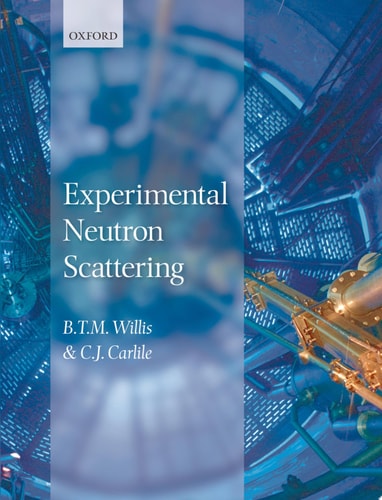
Experimental Neutron Scattering
0
0
As an Amazon Associate and affiliate partner, Menrva Books earns from qualifying purchases. Learn more
Author Description
The first systematic experiments in neutron scattering were carried out in the late 1940s using fission reactors built for the nuclear power programme. Crystallographers were amongst the first to exploit the new technique, but they were soon followed by condensed matter physicists and chemists. Engineers and biologists are the most recent recruits to the club of neutron users. The aim of the book is to provide a broad survey of the experimental activities of all these users. There are many specialist monographs describing particular examples of the application of neutron scattering: fifteen of such monographs have been published already in the Oxford University Press series edited by S. Lovesey and E. Mitchell. However this book will appeal to newcomers to the field of neutron scattering, who may be intimidated by the bewildering array of instruments at central facilities (such as the Institut Laue Langevin in France, the ISIS Laboratory in the UK, or the PSI Laboratory in Switzerland), and who may be uncertain as to which instrument to use.
Menrva's Summary
THE THESIS
This book investigates the practical application of neutron scattering techniques across diverse scientific disciplines, aiming to guide researchers through the complex landscape of modern experimental facilities. Authors B. T. M. Willis and C. J. Carlile leverage their expertise to synthesize the historical development of neutron scattering, originating from nuclear power research, into a comprehensive overview for contemporary practitioners. The text serves as a bridge for newcomers who must navigate the specialized instrumentation found at major international research centers.
THE SCOPE MAP
What You Will Find
- Historical overview of neutron scattering development since the 1940s
- Comparative analysis of instrumentation at major facilities like the Institut Laue Langevin and ISIS
- Cross-disciplinary applications in physics, chemistry, biology, and engineering
Scope Limits
- Does not provide exhaustive theoretical derivations for every specific scattering phenomenon
- Excludes highly specialized, narrow-focus technical monographs already covered in existing literature
THE AUTHORITY PERSPECTIVE
Experts recognize this work as a foundational orientation tool for scientists entering the field of neutron scattering. Readers frequently note that the prose effectively demystifies the intimidating array of instruments available at central research facilities.
Page Count:
352
Publication Date:
2017-01-01
Publisher:
OUP Oxford
ISBN-10:
0191545473
ISBN-13:
9780191545474
Science
Physics
Earth Sciences
Neutrons
Nuclear Physics
Condensed Matter Physics