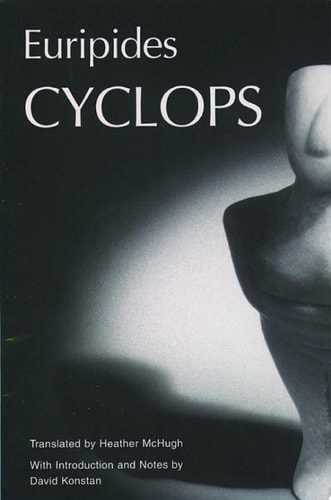
Cyclops
0
0
As an Amazon Associate and affiliate partner, Menrva Books earns from qualifying purchases. Learn more
Author Description
Based on the conviction that only translators who write poetry themselves can properly re-create the celebrated and timeless tragedies of Aeschylus, Sophocles, and Euripides, the Greek Tragedy in New Translations series offers new translations that go beyond the literal meaning of the Greek in order to evoke the poetry of the originals. Under the general editorship of Peter Burian and Alan Shapiro, each volume includes a critical introduction, commentary on the text, full stage directions, and a glossary of the mythical and geographical references in the play. Brimming with lusty comedy and horror, this new version of Euripides' only extant satyr play has been refreshed with all the salty humor, vigorous music, and dramatic shapeliness available in modern American English. Driven by storms onto the shores of the Cyclops' island, Odysseus and his men find that the Cyclops has already enslaved a company of Greeks. When some of Odysseus' crew are seized and eaten by the Cyclops, Odysseus resorts to spectacular stratagems to free his crew and escape the island. In this powerful work, prize-winning poet Heather McHugh and respected classicist David Konstan combine their talents to create this unusually strong and contemporary tragic-comedy marked by lively lyricism and moral subtlety.
Menrva's Summary
THE PULSE
Odysseus and his crew must outwit a cannibalistic Cyclops after being shipwrecked on an island inhabited by the monster and his enslaved companions. Seeking to rescue his men from a gruesome fate, Odysseus employs cunning and deception to overcome the physical superiority of the giant. The narrative follows the classical structure of a satyr play, balancing grotesque horror with ribald humor. The text utilizes a poetic framework that emphasizes the contrast between the civilized Greek hero and the savage, lawless nature of the Cyclops.
INSIDE THE PAGES
- Satyr play genre conventions
- Chorus of satyrs providing comic relief
- Exploration of the theme of hospitality versus savagery
- Poetic translation emphasizing modern American English rhythm
- Critical introduction and historical context
- Commentary on mythical and geographical references
- Full stage directions for performance
- Glossary of terms and names
THE COLLECTIVE ECHO
Readers and critics frequently note the unique position of this work as the only complete satyr play surviving from antiquity. Discussion often centers on the effective blend of dark, visceral horror and the bawdy, irreverent humor characteristic of the genre. Scholars highlight the translation's success in capturing the rhythmic vitality of the original Greek while maintaining accessibility for contemporary audiences. The interplay between the desperate plight of the captives and the absurdity of the satyrs remains a focal point for those analyzing the play's tonal shifts. Many readers appreciate the inclusion of scholarly apparatus, which provides necessary context for the mythological background.
Page Count:
80
Publication Date:
2001-01-01
Publisher:
Oxford University Press
ISBN-10:
019028661X
ISBN-13:
9780190286613
Drama
Poetry
Classical
Greek Tragedy
Satyr Play
Mythology
Theatre
Humanities
Special Topics
Dramatic works
Community Tags
Other Editions(6)



Similar Books








Reader Comments
Share Your Thoughts
No comments yet. Be the first to share your thoughts!