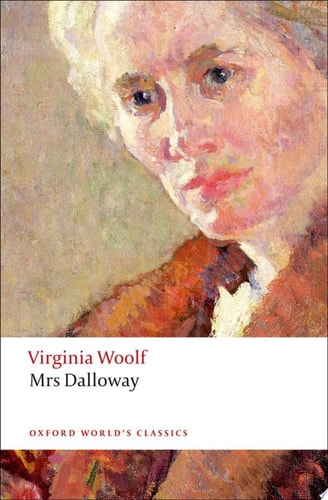
Mrs Dalloway
0
0
As an Amazon Associate and affiliate partner, Menrva Books earns from qualifying purchases. Learn more
Author Description
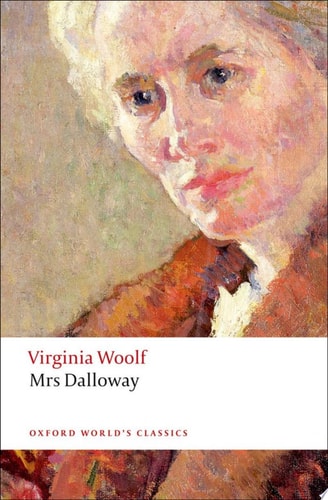
'Fear no more the heat of the sun.' Mrs Dalloway, Virginia Woolf's fourth novel, offers the reader an impression of a single June day in London in 1923. Clarissa Dalloway, the wife of a conservative member of Parliament, is preparing to give an evening party, while the shell-shocked Septimus Warren Smith hears the birds in Regent's Park chattering in Greek. There seems to be nothing, except perhaps London, to link Clarissa and Septimus. She is middle-aged and prosperous, with a sheltered happy life behind her; Smith is young, poor, and driven to hatred of himself and the whole human race. Yet both share a terror of existence, and sense the pull of death. The world of Mrs Dalloway is evoked in Woolf's famous stream of consciousness style, in a lyrical and haunting language which has made this, from its publication in 1925, one of her most popular novels.
Menrva's Summary
THE PULSE
Clarissa Dalloway prepares for an evening party in London while the internal struggles of a shell-shocked veteran, Septimus Warren Smith, parallel her own existential anxieties. Clarissa navigates the social obligations of her status as a politician's wife, attempting to maintain order and composure amidst the sensory overload of post-war London. Simultaneously, Septimus experiences a fractured reality, haunted by memories of the Great War and a profound alienation from society. The narrative framework utilizes a fluid, non-linear stream of consciousness that shifts between the internal monologues of various characters. These perspectives are bound together by the shared physical space of the city and the ticking of Big Ben, which serves as a constant reminder of the passage of time.
INSIDE THE PAGES
- Stream of consciousness narrative technique
- Non-linear temporal structure
- Multiple shifting perspectives
- Focus on internal monologue over external action
- Exploration of post-traumatic stress and mental health
- Sensory-rich descriptions of London streets
- Symbolism of time and mortality
- Interconnected character vignettes
THE COLLECTIVE ECHO
Discussion often centers on Woolf's technical mastery in capturing the fleeting nature of human thought and perception. Readers frequently highlight the stark contrast between Clarissa's social performance and Septimus's psychological disintegration as a critique of post-war British society. Critics often examine the lyrical quality of the prose, noting how the lack of traditional plot structure emphasizes the significance of mundane moments. The novel is widely recognized for its ability to evoke a specific atmosphere of urban isolation despite the proximity of characters. Many readers find the exploration of the characters' shared terror of existence to be the most enduring element of the work.
Page Count:
256
Publication Date:
2008-01-01
Publisher:
Oup Oxford
ISBN-10:
0191609064
ISBN-13:
9780191609060
Literary Fiction
British literature
Psychological
Modernist
classic
Community Tags
Other Editions(4)



Similar Books