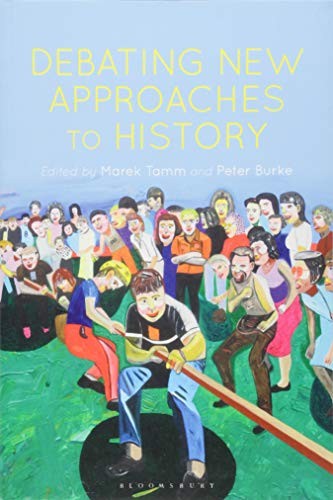
Debating New Approaches to History
0
0
As an Amazon Associate and affiliate partner, Menrva Books earns from qualifying purchases. Learn more
Author Description
With its innovative format, Debating New Approaches to History addresses issues currently at the top of the discipline's theoretical and methodological agenda. In its chapters, leading historians of both older and younger generations from across the Western world and beyond discuss and debate the main problems and challenges that historians are facing today. Each chapter is followed by a critical commentary from another key scholar in the field and the author's response. The volume looks at topics such as the importance and consequences of the 'digital turn' in history (what will history writing be like in a digital age?), the challenge of posthumanist theory for history writing (how do we write the history of non-humans?) and the possibilities of moving beyond traditional sources in history and establishing a dialogue with genetics and neurosciences (what are the perspectives and limits of the so-called 'neurohistory'?). It also revisits older debates in history which remain crucial, such as what the gender approach can offer to historical research or how to write history on a global scale. Debating New Approaches to History does not just provide a useful overview of the new approaches to history it covers, but also offers insights into current historical debates and the process of historical method in the making. It demonstrates how the discipline of history has responded to challenges in society - such as digitalization, globalization and environmental concerns - as well as in humanities and social sciences, such as the 'material turn', 'visual turn' or 'affective turn'. This is a key volume for all students of historiography wanting to keep their finger on the pulse of contemporary thinking in historical research
Menrva's Summary
THE THESIS
This volume investigates the evolving theoretical and methodological landscape of contemporary historical research. Leading historians engage in debates on critical issues facing the discipline, including the impact of digitalization, the implications of posthumanist theory for understanding non-human subjects, and the potential of interdisciplinary dialogues with genetics and neurosciences. The book also revisits enduring debates on gender's role in historical inquiry and the challenges of global historical perspectives. It showcases how history is responding to societal and academic shifts, offering insights into the ongoing development of historical methods.
THE SCOPE MAP
- Discussions on the 'digital turn' and its consequences for history writing.
- Exploration of posthumanist theory's challenge to traditional historical narratives, particularly concerning non-human subjects.
- Analysis of the potential and limitations of 'neurohistory' and dialogues with genetics and neurosciences.
- Revisitation of the gender approach in historical research.
- Consideration of methods for writing history on a global scale.
- Examination of the discipline's response to societal changes like digitalization, globalization, and environmental concerns.
- Insights into the 'material turn', 'visual turn', and 'affective turn' in humanities and social sciences.
THE AUTHORITY PERSPECTIVE
The book is presented as a key volume for students of historiography, aiming to provide an overview of new approaches and insights into contemporary historical debates. Its structure, featuring debates between scholars followed by critical commentary and responses, suggests an academic and rigorous engagement with its subject matter. The inclusion of diverse topics from digitalization to posthumanism indicates a broad scope intended to reflect the current pulse of historical research. The framing suggests it is a valuable resource for understanding the dynamic evolution of historical methodology.
Page Count:
392
Publication Date:
2018-01-01
ISBN-10:
1474281923
ISBN-13:
9781474281928
History
Non-Fiction
Philosophy
Historiography
Global History
Posthumanism
Neuroscience
Methodology
Gender Studies
Genetics
Community Tags
Similar Books