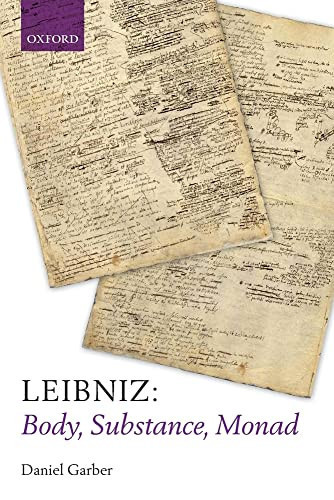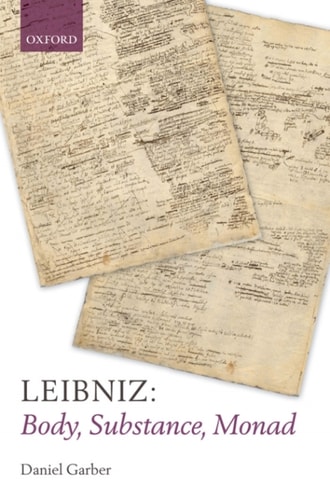
Leibniz: Body, Substance, Monad
0
0
As an Amazon Associate and affiliate partner, Menrva Books earns from qualifying purchases. Learn more
Author Description
Daniel Garber presents an illuminating study of Leibniz's conception of the physical world. Leibniz's commentators usually begin with monads, mind-like simple substances, the ultimate building-blocks of the Monadology. But Leibniz's apparently idealist metaphysics is very puzzling: how can any sensible person think that the world is made up of tiny minds? In this book, Garber tries to make Leibniz's thought intelligible by focusing instead on his notion of body. Beginning with Leibniz's earliest writings, he shows how Leibniz starts as a Hobbesian with a robust sense of the physical world, and how, step by step, he advances to the monadological metaphysics of his later years. Much of the book's focus is on Leibniz's middle years, where the fundamental constituents of the world are corporeal substances, unities of matter and form understood on the model of animals. For Garber monads only enter fairly late in Leibniz's career, and when they enter, he argues, they do not displace bodies but complement them. In the end, though, Garber argues that Leibniz never works out the relation between the world of monads and the world of bodies to his own satisfaction: at the time of his death, his philosophy is still a work in progress.
Menrva's Summary
THE THESIS
How does Leibniz’s evolving conception of the physical world reconcile his early materialism with his later monadological metaphysics? Daniel Garber, a scholar of early modern philosophy, examines the development of Leibniz’s thought by prioritizing the concept of 'body' over the traditional starting point of 'monads.' By tracing this progression from his early Hobbesian influences to his mature philosophy, Garber argues that Leibniz’s metaphysical system remained an incomplete project throughout his life.
THE SCOPE MAP
What You Will Find
- A chronological analysis of Leibniz’s writings from his early career to his final years.
- An examination of the transition from corporeal substances to monads.
- A detailed study of the middle-period philosophy where matter and form are modeled on biological unities.
Scope Limits
- The book does not provide a comprehensive biography of Leibniz’s life outside of his philosophical development.
- It does not attempt to resolve the contradictions in Leibniz’s system, but rather documents their persistence.
THE AUTHORITY PERSPECTIVE
Scholars recognize this work as a significant contribution to the study of Leibniz, particularly for its focus on the often-overlooked middle period of his career. Experts frequently cite Garber’s analysis as a corrective to interpretations that overemphasize the Monadology at the expense of Leibniz’s earlier physical theories.
Page Count:
456
Publication Date:
2009-01-01
Publisher:
OUP Oxford
ISBN-10:
0191570621
ISBN-13:
9780191570629
Philosophy
Philosophy history
Monadology
Metaphysics
Early Modern
History & Surveys