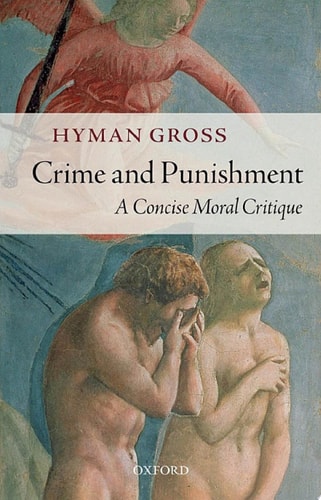
Crime and Punishment: A Concise Moral Critique
0
0
As an Amazon Associate and affiliate partner, Menrva Books earns from qualifying purchases. Learn more
Author Description
It is generally assumed that we are justified in punishing criminals because they have committed a morally wrongful act. Determining when criminal liability should be imposed calls for a moral assessment of the conduct in question, with criminal liability tracking as closely as possible the contours of morality. Versions of this view are frequently argued for in philosophical accounts of crime and punishment, and seem to be presumed by lawyers and policy makers working in the criminal justice system. Challenging such assumptions, this book considers the dominant justifications of punishment and subjects them to a piercing moral critique. It argues that none overcome the objection that people who are convicted of a serious crime and sent to prison have their basic human rights violated. The institution of criminal punishment is shown to be a regrettable necessity not deserving of the moral enthusiasm it enjoys among many politicians and the popular press. From a moral point of view, punishment is entitled at best to grudging toleration. In the course of developing the argument, the book introduces the principal issues of criminal law theory with the aim of presenting a morally enlightened perspective on crimes and why we punish them. Enforcement of the law by police, prosecutors, and courts is a matter of concern for political morality, and the principal practices of the criminal justice system are subjected to moral scrutiny. The book presents an original, engaging, and provocative approach to the philosophy of crime and punishment, challenging not only students, but a wide range of other readers to rethink the fascinating and troubling questions at the foundations of crime and punishment.
Menrva's Summary
THE THESIS
This book investigates whether the prevailing moral justifications for criminal punishment are sufficient to overcome the ethical concerns regarding the violation of basic human rights. Hyman Gross, a legal philosopher, examines the intersection of criminal law and moral theory. He argues that the current system of punishment is a regrettable necessity rather than a morally virtuous practice, challenging the enthusiasm often displayed by policymakers and the public.
THE SCOPE MAP
What You Will Find
- A critical analysis of traditional justifications for criminal liability
- An examination of the conflict between state-sanctioned punishment and individual human rights
- A moral assessment of the practices employed by police, prosecutors, and the judiciary
Scope Limits
- The text does not provide a comprehensive history of penal codes
- It does not offer a practical manual for legal defense or legislative reform
THE AUTHORITY PERSPECTIVE
Experts recognize this work as a significant contribution to the philosophy of law that forces a re-evaluation of standard retributive theories. Readers frequently note the challenging nature of the prose, which demands a high level of engagement with abstract moral concepts.
Page Count:
240
Publication Date:
2012-01-01
Publisher:
OUP Oxford
ISBN-10:
0191630195
ISBN-13:
9780191630194
Philosophy
Sociology
Criminal Law
Administration of Justice
Ethics
Professional Career & Trade
Great Britain
Community Tags
Other Editions(2)
Similar Books