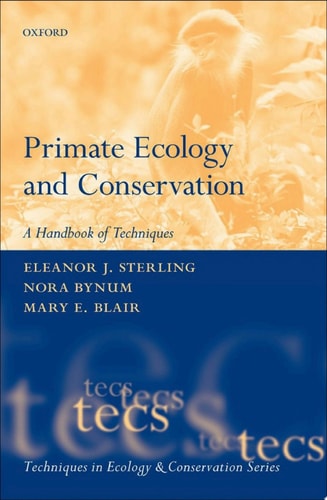
Primate Ecology and Conservation
0
0
As an Amazon Associate and affiliate partner, Menrva Books earns from qualifying purchases. Learn more
Author Description
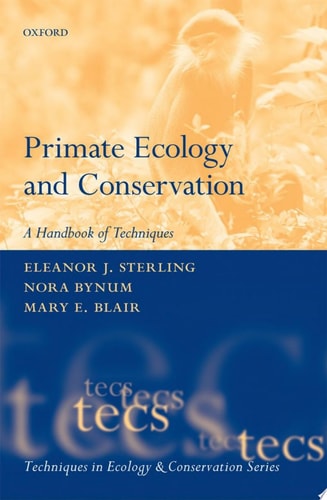
The study of primate ecology and conservation has advanced rapidly in recent years. This practical volume brings together a group of distinguished primate researchers to synthesize field, laboratory, and conservation management techniques for primate ecology and conservation. The synthesis focuses on new and emerging field methods alongside a comprehensive presentation of laboratory and data analysis techniques, as well as the latest methods for determining conservation status and conservation management. This book's particular focus is on innovative ways to study primates in a changing world, including emerging methods such as non-invasive genetic techniques and advanced spatial modeling. In addition to synthesizing field and lab methods, the authors also discuss data interpretation, as well as important guiding questions and principles for students and researchers to consider as they plan research projects in primate ecology and conservation such as: how to choose a field site, acquire research permits, connect with local authorities, communities and researchers, and many other considerations. Although three chapters are dedicated to conservation methods, consideration of conservation status and threats to primate populations are considered throughout this volume where appropriate. This latest publication in the Techniques in Ecology and Conservation Series aims to provide a practical empirical reference text with an international scope, appropriate for graduate students, researchers, and conservation professionals across the globe.
Menrva's Summary
THE THESIS
This volume investigates the most effective methodologies for studying primate populations and implementing conservation strategies in an era of rapid environmental change. The authors, Eleanor J. Sterling, Mary E. Blair, and Nora Bynum, leverage their expertise alongside contributions from a network of distinguished researchers to provide a comprehensive technical framework. The text synthesizes field, laboratory, and management techniques, offering a structured approach for addressing the complex challenges inherent in primate research and habitat preservation.
THE SCOPE MAP
What You Will Find
- Non-invasive genetic sampling techniques
- Advanced spatial modeling and data analysis methods
- Protocols for site selection and permit acquisition
- Strategies for community engagement and local authority collaboration
- Frameworks for assessing conservation status and population threats
Scope Limits
- Does not provide exhaustive biological profiles of individual primate species
- Does not cover historical evolutionary biology outside the context of current conservation needs
THE AUTHORITY PERSPECTIVE
Experts identify this work as a foundational technical reference for graduate students and field professionals. Readers frequently note the practical utility of the text in bridging the gap between theoretical research design and on-the-ground conservation implementation.
Page Count:
440
Publication Date:
2013-01-01
Publisher:
OUP Oxford
ISBN-10:
0191662445
ISBN-13:
9780191662447
Science
Zoology
Conservation Biology
Ecology
Primatology