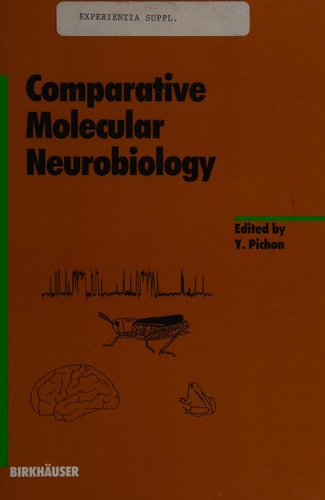
Comparative Molecular Neurobiology
0
0
As an Amazon Associate and affiliate partner, Menrva Books earns from qualifying purchases. Learn more
Author Description
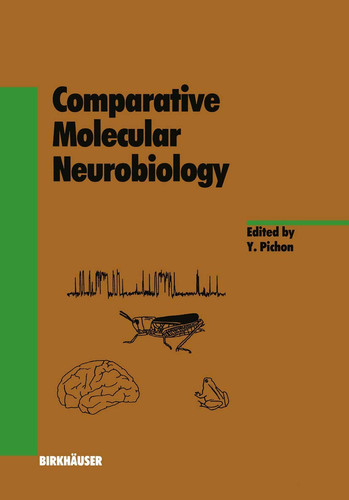
It is generally accepted that all living organisms present on earth derive from one single primordial cell born several billion years ago. One important step in the evolution occurred some 1. 5 billion years ago with the transition from small procaryote cells with relatively simple internal structures such as bacteria to larger and more compleX: eucaryotic cells such as those found in higher animals and plants. Large membrane proteins which enable the cells to communicate appeared early in evolution, and it is believed that the nerve membrane receptors and ionic channels which are observed today in both invertebrate and vertebrate species derive from a common ancestor. Basically, the three identified superfamilies, 1) ionotropic receptors (i. e. receptors containing an integral ionic channel), 2) metabotropic receptors (receptors coupled to G proteins) and 3) voltage-dependent ionic channels (Na+, K + and Ca2+ channels) were already well differentiated when vertebrates separated from invertebrate species. The large number of subtypes which are observed in each superfamily may be of more recent evolutionary origin. To understand how this happened, the best approach was to compare the sequences and the properties of the receptors and ionic channels in species sufficiently distant in the evolutionary tree. In the present volume, many of the best specialists in the field of comparative molecular neurobiology, several of them working on vertebrate and invertebrate species, have accepted to report their most recent findings.
Menrva's Summary
THE THESIS
This book investigates the evolutionary origins and diversification of key molecular components of the nervous system. It examines the transition from simple prokaryotic cells to complex eukaryotic cells, highlighting the early appearance of membrane proteins involved in cell communication. The text posits that modern nerve membrane receptors and ionic channels in both invertebrates and vertebrates evolved from a common ancestor, with distinct superfamilies (ionotropic receptors, metabotropic receptors, and voltage-dependent ionic channels) already well-differentiated before the vertebrate-invertebrate split. The book's approach involves comparing sequences and properties of these components across evolutionarily distant species to understand the development of numerous subtypes.
THE SCOPE MAP
- Comparative analysis of ionotropic receptors, metabotropic receptors, and voltage-dependent ionic channels.
- Discussion of the evolutionary timeline of these molecular components, from early cells to vertebrates.
- Insights into the common ancestry of nerve membrane receptors and ionic channels.
- Examination of the diversification of receptor and channel subtypes.
- Contributions from leading specialists in comparative molecular neurobiology.
- Focus on both vertebrate and invertebrate species for evolutionary comparison.
THE AUTHORITY PERSPECTIVE
This volume presents a collection of recent findings from specialists in comparative molecular neurobiology. The approach taken, comparing distant species to understand evolutionary pathways, suggests a detailed and analytical treatment of the subject matter. The focus on fundamental molecular structures and their evolutionary history indicates a text aimed at researchers and advanced students in the field.
Page Count:
436
Publication Date:
2013-03-08
Publisher:
Birkhäuser
ISBN-10:
3034872658
ISBN-13:
9783034872652
Non-Fiction
Science
Evolutionary Biology
Neurobiology