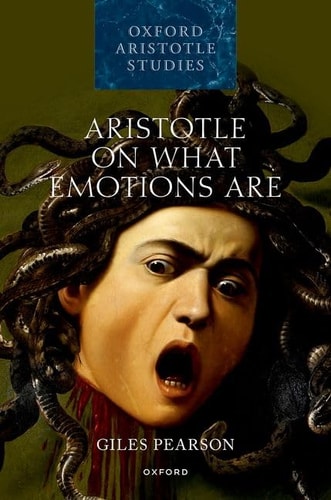
Aristotle on What Emotions Are
0
0
As an Amazon Associate and affiliate partner, Menrva Books earns from qualifying purchases. Learn more
Author Description
This book provides the first systematic interpretation of what Aristotle thinks occurrent emotions are and points to some philosophical merits of his account. It is argued that he holds that emotions are representational pleasures or distresses that are formed in response to other intentional states that apprehend their objects. Even this bare formulation of his view is notable in several respects. First, the idea that the pleasures or distresses of emotions are representational--directed at objects in the world (or ourselves)--contrasts sharply with accounts that identify emotions with non-representational sensations or feelings. Second, the notion that emotions are pleasurable or distressful responses to other intentional states that apprehend their objects provides a fundamental contrast with many current accounts which instead view emotions as (in part) modes of apprehension or kinds of epistemic state themselves. Third, Aristotle's view stands in opposition to motivational accounts of emotions, insofar as while he thinks that emotions interact with desires or motivational states in important ways, he does not think they are themselves (even in part) motivational states. They are representational pleasures or distresses alone. Together, these three points give Aristotle a novel understanding of the representational role emotions play; namely, neither descriptive, nor prescriptive, but reactive. Besides developing these ideas, both textually and philosophically, the book also explores how Aristotle individuates emotion types; his understanding of the material dimension of emotions; and how his view can provide a novel explanation of recalcitrant emotions, a notoriously problematic phenomenon for many recent accounts of emotions.
Menrva's Summary
THE THESIS
This book investigates the core question of how Aristotle defines occurrent emotions and evaluates the philosophical merits of his specific account. Giles Pearson, an expert in ancient philosophy, utilizes a rigorous textual and philosophical analysis to argue that Aristotle views emotions as representational pleasures or distresses. By examining Aristotle's primary texts, Pearson contrasts this historical perspective with contemporary theories that categorize emotions as sensations, epistemic states, or motivational drives.
THE SCOPE MAP
What You Will Find
- A systematic interpretation of Aristotle's theory of occurrent emotions.
- An analysis of the representational role of emotions as reactive rather than descriptive or prescriptive.
- A detailed exploration of how Aristotle individuates specific emotion types.
- An examination of the material dimension of emotions and their interaction with intentional states.
- A proposed explanation for recalcitrant emotions within the Aristotelian framework.
THE AUTHORITY PERSPECTIVE
Scholars and students of ancient philosophy recognize this work as a significant contribution to the study of Aristotelian psychology. Readers frequently note the academic density of the prose, which is intended for those with a strong background in classical philosophy and contemporary emotion theory.
Page Count:
400
Publication Date:
2024-10-18
Publisher:
Oxford University Press
ISBN-10:
0198879342
ISBN-13:
9780198879343
Philosophy
Psychology
Politics
History & Schools of Thought
Aristotle
Consciousness & Thought
Ethics
Community Tags
Other Editions(2)
Similar Books