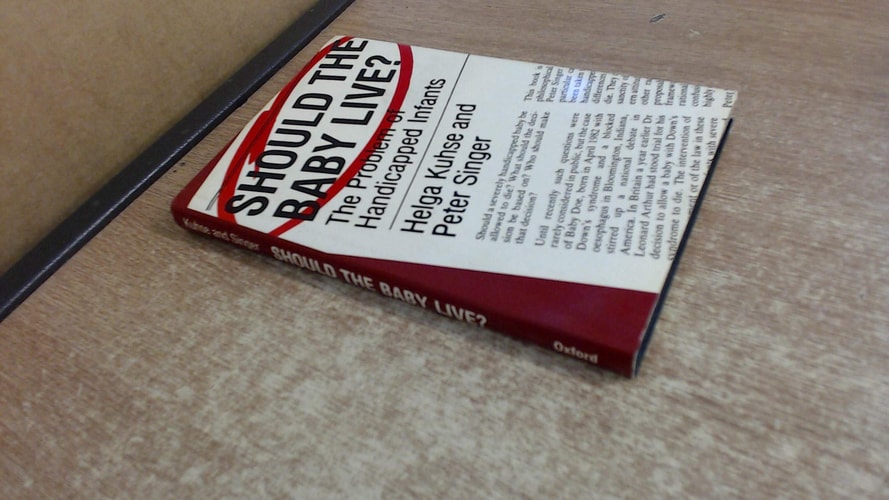
Should the Baby Live?
0
0
As an Amazon Associate and affiliate partner, Menrva Books earns from qualifying purchases. Learn more
Author Description
Few subjects have generated so many newspaper headlines and such heated controversy in recent years as the treatment or non-treatment, of handicapped newborns. This book, by two authorities on medical ethics,is a philosophical analysis of the subject, but accessibly written and rooted in practicalities and case studies throughout. The authors examine the doctrine of the absolute sanctity of human life; look at some actual examples where decisions have been made one way or the other; consider criteria for deciding when life is worthwhile; investigate the differences between killing and letting die; compare Western attitudes and practices with those of other cultures; and make proposals for a decision-making framework.Reviewing Peter Singer's book on ethics and sociology, The New Republic wrote:"Singer takes the reader through important and difficult questions with a lucidity which must be the envy of any writer on ethics." Reviewing his Practical Ethics, The New York Review of Books commented: "The utility of this utilitarian's book to students of the subject can hardly be exaggerated." These statements are equally true of Should the Baby Live? Among the questions discussed are:--Is it right to do less to prolong the life of a handicapped infant than one would do for a normal baby? If so, how severe must the handicap be?--Who should make the decision? The parents? The doctors? The courts?--Whose interest should be considered? Only the baby's? Or also those of the parents and other children they might have?--Should weight be given to the cost to society of extensive medical treatment and institutional care?
Menrva's Summary
THE THESIS
This book investigates the ethical legitimacy of withholding medical treatment from handicapped newborns by challenging the doctrine of the absolute sanctity of human life. The authors, both established scholars in bioethics, utilize a utilitarian framework to evaluate the moral status of infants, the rights of parents and medical professionals, and the broader societal implications of resource allocation in neonatal care. By grounding their philosophical inquiry in practical case studies, they seek to establish a coherent decision-making framework for complex medical dilemmas.
THE SCOPE MAP
What You Will Find
- Philosophical analysis of the distinction between killing and letting die
- Comparative study of Western versus non-Western cultural attitudes toward infant care
- Examination of criteria for determining when a life is considered worthwhile
- Discussion on the roles of parents, physicians, and courts in medical decision-making
Scope Limits
- The text does not provide a definitive legal manual for clinical practice
- It does not cover the entirety of pediatric medicine beyond the specific context of neonatal handicap
THE AUTHORITY PERSPECTIVE
Critics and scholars frequently note the clarity and accessibility of the authors' prose, which makes complex ethical arguments understandable for a general audience. The text is widely regarded as a significant contribution to the field of bioethics, particularly for its rigorous application of utilitarian principles to sensitive medical scenarios.
Page Count:
235
Publication Date:
1986-01-23
Publisher:
Oxford University Press
ISBN-10:
0192177451
ISBN-13:
9780192177452
Non-Fiction
Philosophy
Euthanasia
Medical Ethics
Bioethics
Sociology
Infanticide
Community Tags
Similar Books