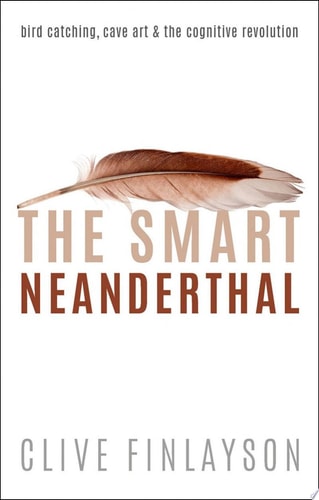
The Smart Neanderthal
0
0
As an Amazon Associate and affiliate partner, Menrva Books earns from qualifying purchases. Learn more
Author Description
Since The Late 1980s The Dominant Theory Of Human Origins Has Been That A 'cognitive Revolution' (c.50,000 Years Ago) Led To The Advent Of Our Species, Homo Sapiens. As A Result Of This Revolution Our Species Spread And Eventually Replaced All Existing Archaic Homo Species, Ultimately Leading To The Superiority Of Modern Humans. Or So We Thought. As Clive Finlayson Explains, The Latest Advances In Genetics Prove That There Was Significant Interbreeding Between Modern Humans And The Neanderthals. All Non-africans Today Carry Some Neanderthal Genes. We Have Also Discovered Aspects Of Neanderthal Behaviour That Indicate That They Were Not Cognitively Inferior To Modern Humans, As We Once Thought, And In Fact Had Their Own Rituals And Art. Finlayson, Who Is At The Forefront Of This Research, Recounts The Discoveries Of His Team, Providing Evidence That Neanderthals Caught Birds Of Prey, And Used Their Feathers For Symbolic Purposes. There Is Also Evidence That Neanderthals Practised Other Forms Of Art, As The Recently Discovered Engravings In Gorham's Cave Gibraltar Indicate. Linking All The Recent Evidence, The Smart Neanderthal Casts A New Light On The Neanderthals And The 'cognitive Revolution'. Finlayson Argues That There Was No Revolution And, Instead, Modern Behaviour Arose Gradually And Independently Among Different Populations Of Modern Humans And Neanderthals. Some Practices Were Even Adopted By Modern Humans From The Neanderthals. Finlayson Overturns Classic Narratives Of Human Origins, And Raises Important Questions About Who We Really Are.
Menrva's Summary
THE THESIS
Does the traditional theory of a sudden 'cognitive revolution' 50,000 years ago accurately explain the rise of modern human behavior and the extinction of archaic species? Clive Finlayson, an evolutionary biologist and director of the Gibraltar Museum, challenges the long-standing narrative of Homo sapiens' superiority. Drawing on recent genetic data and archaeological findings from his own excavations, he argues that modern behavior emerged gradually across various populations, including Neanderthals, rather than through a singular, localized event.
THE SCOPE MAP
What You Will Find
- Analysis of genetic interbreeding between Neanderthals and modern humans.
- Archaeological evidence of symbolic behavior, including bird feather usage and cave engravings.
- A critique of the 'cognitive revolution' hypothesis in favor of a gradualist model of human development.
Scope Limits
- The text focuses primarily on the Neanderthal-modern human interface in Europe and the Mediterranean.
- It does not provide a comprehensive history of all hominin species outside the scope of the Neanderthal-sapiens interaction.
THE AUTHORITY PERSPECTIVE
Experts recognize this work as a significant contribution to the ongoing debate regarding Neanderthal cognitive capacity and the timeline of human evolution. Readers frequently note the accessible yet evidence-based approach Finlayson takes in synthesizing complex archaeological data for a general audience.
Page Count:
287
Publication Date:
2019-01-01
Publisher:
Oxford University Press
ISBN-10:
0192518119
ISBN-13:
9780192518118
History
Science
Archaeology
Paleoanthropology
Anthropology
Community Tags
Similar Books