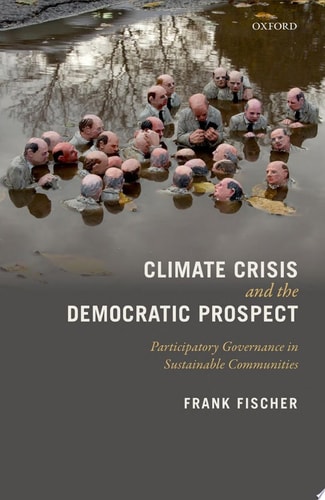
Climate Crisis and the Democratic Prospect
0
0
As an Amazon Associate and affiliate partner, Menrva Books earns from qualifying purchases. Learn more
Author Description
Can Contemporary Democratic Governments Tackle Climate Crisis? Some Argue That Democracy Has To Be A Central Part Of A Strategy To Deal With Climate Change. Others Argue That Experience Shows It Not To Be Up To The Challenge In The Time Frame Available-that It Will Require A Stronger Hand, Even A Form Of Eco-authoritarianism. A Question That Does Not Lend Itself To An Easy Assessment, This Volume Seeks To Out And Assess The Competing Answers. While The Book Supports The Case For Environmental Democracy, It Argues That Establishing And Sustaining Democratic Practices Will Be Difficult During The Global Climate Turmoil Ahead, Especially In The Face Of State Of Emergencies. This Inquiry Undertakes A Search For An Appropriate Political-ecological Strategy For Preserving A Measure Of Democratic Governance During Hard Times. Without Ignoring The Global Dimensions Of The Crisis, The Analysis Finds An Alternative Path In The Theory And Practices Participatory Environmental Governance Embodied In A Growing Relocalization Movement, And Global Eco-localism Generally. Although Such Movements Largely Operate Under The Radar Of The Social Sciences, The Media And The Political Realm Generally, These Vibrant Socio-ecological Movements Not Only Speak To The Crisis Ahead, But Are Already Well Established And Thriving On The Ground, Including Ecovillages, Eco-communes, Eco-neighborhoods, And Local Transition Initiatives. With The Help Of These Ideas And Projects, The Task Is To Influence The Discourse Of Environmental Political Theory In Ways That Can Be Of Assistance To Those Who Will Face Climate Crisis In Its Full Magnitude.
Menrva's Summary
THE THESIS
Can contemporary democratic governments effectively address the climate crisis, or does the urgency of the situation necessitate a shift toward authoritarian governance? Frank Fischer, a scholar in environmental politics, examines the tension between democratic institutions and the rapid, large-scale interventions required to mitigate climate change. The author evaluates the viability of environmental democracy against the rise of eco-authoritarian arguments, ultimately proposing a strategy centered on participatory governance and local-level socio-ecological movements.
THE SCOPE MAP
What You Will Find
- Analysis of the theoretical conflict between democratic processes and emergency climate action
- Examination of participatory environmental governance models
- Case studies of relocalization movements, including ecovillages and transition initiatives
Scope Limits
- Does not provide a comprehensive technical manual for climate engineering or global policy implementation
- Focuses primarily on political theory and grassroots governance rather than purely scientific or economic modeling
THE AUTHORITY PERSPECTIVE
Scholars and political theorists frequently cite this work for its nuanced exploration of the intersection between political legitimacy and environmental necessity. Readers often note the academic density of the prose, which serves as a rigorous contribution to the field of environmental political theory.
Page Count:
312
Publication Date:
2017-01-01
Publisher:
Oxford University Press
ISBN-10:
0192525735
ISBN-13:
9780192525734
Sociology
Climate Change
Democracy
Political Theory
Community Tags
Similar Books