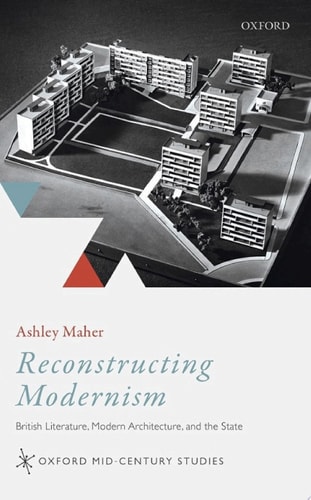
Reconstructing Modernism: British Literature, Modern Architecture, and the State
0
0
As an Amazon Associate and affiliate partner, Menrva Books earns from qualifying purchases. Learn more
Author Description
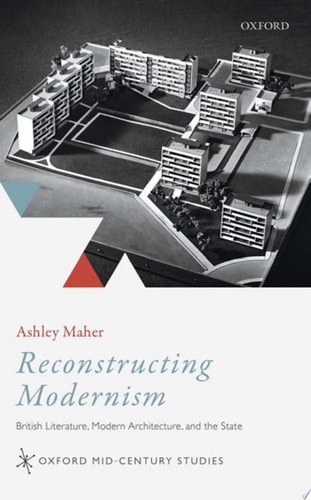
Reconstructing Modernism establishes for the first time the centrality of modernist buildings and architectural periodicals to British mid-century literature. Drawing upon a wealth of previously unexplored architectural criticism by British authors, this book reveals how arguments about architecture led to innovations in literature, as well as to redesigns in the concept of modernism itself. While the city has long been a focus of literary modernist studies, architectural modernism has never had its due. Scholars usually characterize architectural modernism as a parallel modernism or even an incompatible modernism to literature. Giving special attention to dystopian classics Brave New World and Nineteen Eighty-Four, this study argues that sustained attention to modern architecture shaped mid-century authors' political and aesthetic commitments. After many writers deemed modernist architects to be agents for communism and other collectivist movements, they squared themselves—and literary modernist detachment and aesthetic autonomy—against the seemingly tyrannical utopianism of modern architecture; literary aesthetic qualities were reclaimed as political qualities. In this way, Reconstructing Modernism redraws the boundaries of literary modernist studies: rather than simply adding to its canon, it argues that the responsibility for defining literary modernism for the mid-century public was shared by an incredible variety of authors—Edwardians, modernists, satirists, and even anti-modernists.
Menrva's Summary
THE THESIS
This book investigates how the intersection of modernist architecture and mid-century British literature redefined the political and aesthetic boundaries of the modernist movement. Author Ashley Maher, a scholar of twentieth-century literature, utilizes a collection of previously unexamined architectural criticism to argue that the built environment served as a primary catalyst for literary innovation. By analyzing the tension between literary autonomy and the perceived collectivist utopianism of architectural design, the text demonstrates how authors integrated architectural discourse into their own aesthetic and political frameworks.
THE SCOPE MAP
What You Will Find
- Analysis of architectural criticism written by British authors during the mid-twentieth century.
- Comparative studies of literary texts including Brave New World and Nineteen Eighty-Four.
- Examination of the shift in literary modernism from detachment to political engagement.
Scope Limits
- The study focuses primarily on the British context and does not provide a global survey of architectural modernism.
- The analysis is restricted to the mid-century period and does not cover contemporary architectural theory.
THE AUTHORITY PERSPECTIVE
Scholars recognize this work as a significant contribution to the field of mid-century studies for its focus on the neglected relationship between urban design and literary production. The text is noted for its rigorous archival research and its ability to challenge established definitions of the modernist canon.
Page Count:
269
Publication Date:
2020-01-01
Publisher:
OUP Oxford
ISBN-10:
0192548433
ISBN-13:
9780192548436
History
English literature
Modernism
Literary Criticism
Indigenous
Political Theory
Architectural History
British literature