What Do Dreams Do?
0
0
As an Amazon Associate and affiliate partner, Menrva Books earns from qualifying purchases. Learn more
Author Description
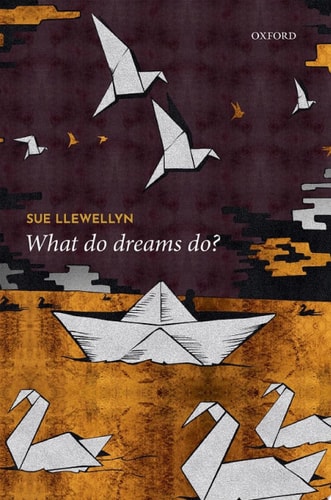
We have puzzled over dreams for centuries. From ancient societies, believing dreams to be messages from the gods, Freud's theory of dreams revealing our unconscious minds to modern day experiments in psychology and neuroscience, dreams continue to fascinate but also be a source of mystery. Are dreams just mental froth or do they have a purpose? This book argues that, originally, we dreamed to survive. Dreaming brains identify non-obvious associations, taking people, places, and events out of their waking-life context to uncover complex and, seemingly, unrelated connections. In our evolutionary past, survival depended on being able to detect these divergent, associative patterns to anticipate what predators and other humans might do, as we moved around to secure food and water and meet potential mates. Making associations drives many, if not all, brain functions. In the present day, dream associations may support memory, emotional stability, creativity, unconscious decision-making and prediction, while also contributing to mental illness. Written in a lively and accessible style, and showing the reader how to identify patterns in their own dreams, this book presents a highly original theory of dreaming and will be a compelling read for anyone interested in psychology, consciousness, and the arts, as well as those involved in dream research.
Menrva's Summary
THE THESIS
This book investigates the evolutionary purpose of dreaming, proposing that the brain utilizes dreams to identify non-obvious associations necessary for survival. Author Sue Llewellyn, a researcher in the field of psychology and consciousness, synthesizes historical perspectives with contemporary neuroscience. She argues that the associative patterns formed during sleep were once critical for anticipating threats and securing resources in ancestral environments. The text posits that these same mechanisms now underpin modern cognitive functions such as memory consolidation, emotional regulation, and creative problem-solving.
THE SCOPE MAP
What You Will Find
- Evolutionary theory of dreaming as a survival mechanism
- Analysis of associative pattern recognition in the brain
- Practical methods for identifying personal dream patterns
- Historical overview of dream interpretation from ancient societies to Freud
Scope Limits
- Does not provide a comprehensive clinical guide for treating sleep disorders
- Does not focus on the spiritual or mystical interpretations of dreams
THE AUTHORITY PERSPECTIVE
Readers and experts frequently note the accessible prose style that makes complex neuroscientific concepts understandable for a general audience. The work is recognized for offering a distinct evolutionary framework that challenges traditional psychoanalytic views on dreaming.
Page Count:
256
Publication Date:
2020-01-01
Publisher:
OUP Oxford
ISBN-10:
019255090X
ISBN-13:
9780192550903
Non-Fiction
Psychology
Dream interpretation
Sleep Science
Neuroscience
Evolutionary Biology
Community Tags
Similar Books