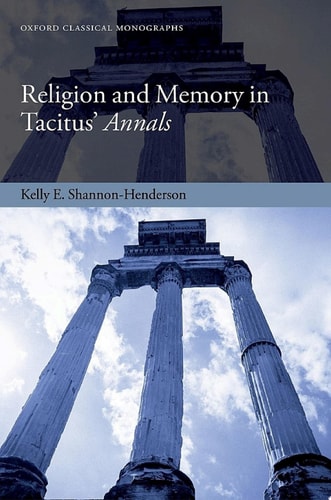
Religion and Memory in Tacitus' Annals
0
0
As an Amazon Associate and affiliate partner, Menrva Books earns from qualifying purchases. Learn more
Author Description
Throughout his narrative of Julio-Claudian Rome in the Annals, Tacitus includes numerous references to the gods, fate, fortune, astrology, omens, temples, priests, the emperor cult, and other religious material. Though scholars have long considered Tacitus' discussion of religion of minor importance, this volume demonstrates the significance of such references to an understanding of the work as a whole by analyzing them using cultural memory theory, which views religious ritual as a key component in any society's efforts to create a lived version of the past that helps define cultural identity in the present. Tacitus, who was not only an historian, but also a member of Rome's quindecimviral priesthood, shows a marked interest in even the most detailed rituals of Roman religious life, yet his portrayal of religious material also suggests that the system is under threat with the advent of the principate. Some traditional rituals are forgotten as the shape of the Roman state changes while, simultaneously, a new form of cultic commemoration develops as deceased emperors are deified and the living emperor and his family members are treated in increasingly worshipful ways by his subjects. This study traces the deployment of religious material throughout Tacitus' narrative in order to show how he views the development of this cultic "amnesia" over time, from the reign of the cryptic, autocratic, and oddly mystical Tiberius, through Claudius' failed attempts at reviving tradition, to the final sacrilegious disasters of the impious Nero. As the first book-length treatment of religion in the Annals, it reveals how these references are a key vehicle for his assessment of the principate as a system of government, the activities of individual emperors, and their impact on Roman society and cultural identity.
Menrva's Summary
THE THESIS
This volume investigates how Tacitus utilizes religious references within the Annals to critique the political and social transformations of the Roman principate. Kelly E. Shannon-Henderson, a scholar of classical literature, applies cultural memory theory to examine the intersection of traditional Roman religious practice and the emerging imperial cult. She argues that Tacitus uses the decline of ancestral rituals and the rise of emperor worship to illustrate a broader cultural amnesia that defines the transition from Republic to Empire.
THE SCOPE MAP
What You Will Find
- Analysis of religious elements including omens, astrology, temples, and the quindecimviral priesthood.
- Application of cultural memory theory to historiographical narrative.
- Examination of the reigns of Tiberius, Claudius, and Nero through the lens of religious practice.
Scope Limits
- The study focuses specifically on the Annals and does not provide a comprehensive survey of all Tacitean works.
- It does not attempt a general history of Roman religion, but rather focuses on Tacitus' specific literary deployment of religious material.
THE AUTHORITY PERSPECTIVE
Experts recognize this work as a significant contribution to Tacitean studies, particularly for its focus on a previously under-analyzed aspect of the Annals. Readers frequently note the academic density of the prose, which is intended for scholars and students of classical history.
Page Count:
424
Publication Date:
2018-01-01
Publisher:
OUP Oxford
ISBN-10:
0192569112
ISBN-13:
9780192569110
History
Religion
Literary Criticism
Historiography
Ancient - Rome
Ancient History
Rome religion
Rome
Memory
Community Tags
Other Editions(3)

Similar Books
Reader Comments
Share Your Thoughts
No comments yet. Be the first to share your thoughts!