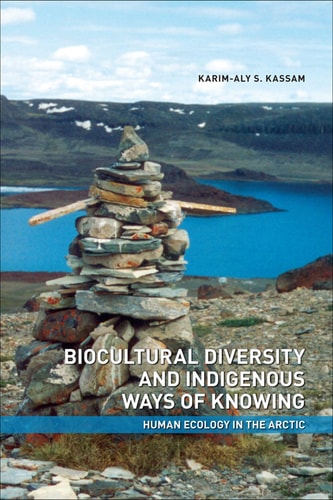
Biocultural Diversity and Indigenous Ways of Knowing: Human Ecology in the Arctic
0
0
As an Amazon Associate and affiliate partner, Menrva Books earns from qualifying purchases. Learn more
Author Description
At the dawn of the third millennium, dramatic challenges face human civilization everywhere. Relations between human beings and their environment are in peril, with mounting threats to both biological diversity of life on earth and cultural diversity of human communities. The peoples of the Circumpolar Arctic are at the forefront of these challenges and lead the way in seeking meaningful responses.In Biocultural Diversity and Indigenous Ways of Knowing: Human Ecology in the Arctic Karim-Aly Kassam positions the Arctic and sub-Arctic as a homeland rather than simply as a frontier for resource exploitation. Kassam aims to empirically and theoretically illustrate the synthesis between the cultural and the biological, using human ecology as a conceptual and analytical lens. Drawing on research carried out in partnership with indigenous northern communities, three case studies illustrate that subsistence hunting and gathering are not relics of an earlier era but rather remain essential to both cultural diversity and to human survival.This book deals with contemporary issues such as climate change, indigenous knowledge, and the impact of natural resource extraction. It is a narrative of community-based research, in the service of the communities for the benefit of the communities. It provides resource-based industry, policy makers, and students with an alternative way of engaging indigenous communities and transforming our perspective on conservation of ecological and cultural diversity.
Menrva's Summary
THE THESIS
This book investigates the intricate relationship between biological diversity and indigenous knowledge systems in the Arctic, challenging conventional views of the region as a mere resource frontier. Karim-Aly Kassam, drawing on extensive community-based research, argues for a synthesis of cultural and biological elements through the lens of human ecology. The work highlights how subsistence practices remain vital for both cultural survival and ecological balance in the face of contemporary challenges like climate change and resource extraction. It presents a narrative of collaborative research designed to benefit indigenous northern communities.
THE SCOPE MAP
- Empirical and theoretical illustrations of the synthesis between cultural and biological diversity.
- Three case studies from indigenous northern communities demonstrating the importance of subsistence hunting and gathering.
- Analysis of contemporary issues including climate change, indigenous knowledge, and the impact of natural resource extraction.
- A framework for alternative engagement with indigenous communities regarding conservation of ecological and cultural diversity.
THE AUTHORITY PERSPECTIVE
The book is positioned as a vital resource for understanding the complex challenges facing the Circumpolar Arctic at the dawn of the third millennium. It aims to provide policymakers, resource-based industries, and students with an alternative perspective on conservation and engagement with indigenous communities. The work emphasizes community-based research conducted in partnership with indigenous peoples, suggesting a focus on collaborative and beneficial outcomes. Its approach through human ecology seeks to bridge the gap between biological and cultural diversity.
Page Count:
290
Publication Date:
2012-03-05
Publisher:
University of Calgary Press
ISBN-10:
1552384926
ISBN-13:
9781552384923
Non-Fiction
Science
Human ecology
Cultural Anthropology
Arctic Studies
Community Tags
Other Editions(2)

Similar Books