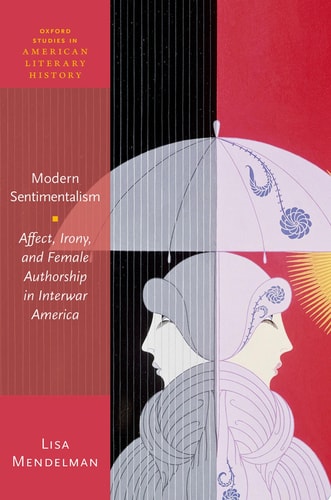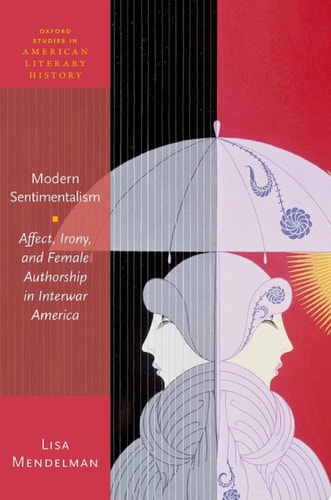
Modern Sentimentalism: Affect, Irony, and Female Authorship in Interwar America
0
0
As an Amazon Associate and affiliate partner, Menrva Books earns from qualifying purchases. Learn more
Author Description
Modern Sentimentalism examines how American female novelists reinvented sentimentalism in the modernist period. Just as the birth of the modern woman has long been imagined as the death of sentimental feeling, modernist literary innovation has been understood to reject sentimental aesthetics. Modern Sentimentalism reframes these perceptions of cultural evolution. Taking up icons such as the New Woman, the flapper, the free lover, the New Negro woman, and the divorcée, this book argues that these figures embody aspects of a traditional sentimentality while also recognizing sentiment as incompatible with ideals of modern selfhood. These double binds equally beleaguer the protagonists and shape the styles of writers like Willa Cather, Edith Wharton, Anita Loos, and Jessie Fauset. 'Modern sentimentalism' thus translates nineteenth-century conventions of sincerity and emotional fulfillment into the skeptical, self-conscious modes of interwar cultural production. Reading canonical and under-examined novels in concert with legal briefs, scientific treatises, and other transatlantic period discourse, and combining traditional and quantitative methods of archival research, Modern Sentimentalism demonstrates that feminine feeling, far from being peripheral to twentieth-century modernism, animates its central principles and preoccupations.
Menrva's Summary
THE THESIS
This book investigates how American female novelists during the interwar period reconfigured sentimentalism to navigate the tensions between traditional emotional expression and the emerging ideals of modern selfhood. Lisa Mendelman, an academic scholar, utilizes a combination of traditional archival research and quantitative analysis to argue that feminine feeling was not a rejection of modernism but a core component of its development. By examining the works of authors such as Willa Cather and Edith Wharton alongside period-specific legal and scientific discourse, the author demonstrates how these writers integrated nineteenth-century emotional conventions into the skeptical, self-conscious framework of twentieth-century literature.
THE SCOPE MAP
What You Will Find
- Analysis of literary figures including the New Woman, the flapper, and the New Negro woman.
- Comparative study of canonical novels alongside legal briefs and scientific treatises.
- Integration of quantitative methods with traditional literary archival research.
Scope Limits
- The study focuses specifically on interwar American literature and does not extend to post-World War II developments.
- The analysis is limited to the intersection of female authorship and sentimentalism, excluding broader male-centric modernist movements.
THE AUTHORITY PERSPECTIVE
Scholars and critics recognize this work as a significant contribution to the study of American modernism and gendered literary history. Readers frequently note the academic density of the prose and the rigor with which the author bridges the gap between nineteenth-century sentiment and twentieth-century irony.
Page Count:
256
Publication Date:
2019-01-01
Publisher:
OUP Oxford
ISBN-10:
0192589725
ISBN-13:
9780192589729
Cultural History
English & College Success
Gender Studies
Literary Criticism
Women authors
American
English
Modernism
Womens Studies