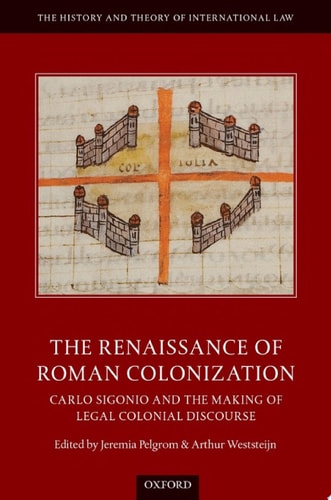
The Renaissance of Roman Colonization: Carlo Sigonio and the Making of Legal Colonial Discourse
0
0
As an Amazon Associate and affiliate partner, Menrva Books earns from qualifying purchases. Learn more
Author Description
The colonization policies of Ancient Rome followed a range of legal arrangements concerning property distribution and state formation, documented in fragmented textual and epigraphic sources. When antiquarian scholars rediscovered and scrutinized these sources in the Renaissance, their analysis of the Roman colonial model formed the intellectual background for modern visions of empire. What does it mean to exercise power at and over distance? This book foregrounds the pioneering contribution to this debate of the great Italian Renaissance scholar Carlo Sigonio (1522/3-84). His comprehensive legal interpretation of Roman society and Roman colonization, which for more than two centuries remained the leading account of Roman history, has been of immense (but long disregarded) significance for the modern understanding of Roman colonial practices and of the legal organization and implications of empire. Bringing together experts on Roman history, the history of classical scholarship, and the history of international law, this book analyzes the context, making, and impact of Sigonio's reconstruction of the Roman colonial model. It shows how his legal interpretation of Roman colonization originated and how it informed the development of legal colonial discourse, from imperial reform and colonial independence in the nascent United States of America to Enlightenment accounts of property distribution. Through a detailed analysis of scholarly and political visions of Roman colonization from the Renaissance to today, this book shows the enduring relevance of legal interpretations of the Roman colonial model for modern experiences of empire.
Menrva's Summary
THE THESIS
This book investigates how the Renaissance scholar Carlo Sigonio’s legal reconstruction of Roman colonization provided the intellectual framework for modern colonial discourse and imperial governance. Arthur Weststeijn and Jeremia Pelgrom, both established scholars in the history of ideas and classical antiquity, curate a collection of essays that analyze how Sigonio’s 16th-century interpretations of Roman property and state formation influenced political thought for centuries. The authors argue that Sigonio’s work served as a critical bridge between ancient Roman practices and the development of modern international law and imperial policy.
THE SCOPE MAP
What You Will Find
- Analysis of Carlo Sigonio’s legal interpretations of Roman colonial society.
- Examination of the influence of Roman colonial models on Enlightenment political theory.
- Historical tracing of Sigonio’s impact on colonial independence movements and imperial reform in the United States.
- Interdisciplinary synthesis of classical scholarship, Roman history, and the history of international law.
Scope Limits
- The text does not provide a comprehensive biography of Carlo Sigonio, focusing instead on his specific contributions to legal colonial discourse.
- The analysis does not cover non-Western colonial models or pre-Renaissance interpretations of Roman law.
THE AUTHORITY PERSPECTIVE
Experts in the history of international law and classical scholarship identify this work as a significant contribution to understanding the intellectual lineage of modern empire. Readers frequently note the academic density of the prose, which is intended for specialists in legal history and Renaissance political thought.
Page Count:
215
Publication Date:
2020-01-01
Publisher:
OUP Oxford
ISBN-10:
0192591541
ISBN-13:
9780192591548
History
Professional Career & Trade
Classical Scholarship
Legal History
International Law
Community Tags
Similar Books