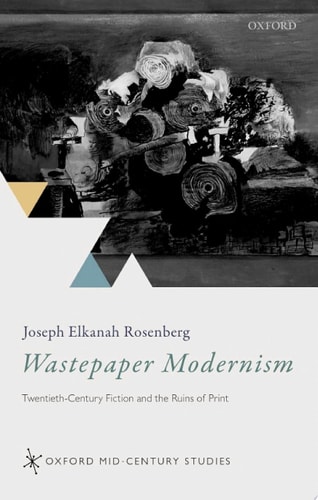
Wastepaper Modernism: Twentieth-Century Fiction and the Ruins of Print
0
0
As an Amazon Associate and affiliate partner, Menrva Books earns from qualifying purchases. Learn more
Author Description
From Henry James' fascination with burnt manuscripts to destroyed books in the fiction of the Blitz; from junk mail in the work of Elizabeth Bowen to bureaucratic paperwork in Vladimir Nabokov; modern fiction is littered with images of tattered and useless paper that reveal an increasingly uneasy relationship between literature and its own materials over the course of the twentieth-century. Wastepaper Modernism argues that these images are vital to our understanding of modernism, disclosing an anxiety about textual matter that lurks behind the desire for radically different modes of communication. At the same time that writers were becoming infatuated with new technologies like the cinema and the radio, they were also being haunted by their own pages. Having its roots in the late-nineteenth century, but finding its fullest constellation in the wake of the high modernist experimentation with novelistic form, "wastepaper modernism" arises when fiction imagines its own processes of transmission and representation breaking down. When the descriptive capabilities of the novel exhaust themselves, the wastepaper modernists picture instead the physical decay of the book's own primary matter. Bringing together book history and media theory with detailed close reading, Wastepaper Modernism reveals modernist literature's dark sense of itself as a ruin in the making.
Menrva's Summary
THE THESIS
How does the recurring imagery of discarded, decayed, or useless paper in twentieth-century fiction reflect an underlying anxiety regarding the materiality of the book? Joseph Elkanah Rosenberg examines the intersection of literature, book history, and media theory to argue that modernist writers were preoccupied with the physical breakdown of their own medium. By analyzing works from authors like Henry James, Elizabeth Bowen, and Vladimir Nabokov, the author demonstrates that these depictions of wastepaper reveal a profound skepticism toward the novel's capacity for representation during an era of emerging electronic communication. The text posits that modernism viewed itself as a ruin in the making, constantly negotiating the tension between traditional print and new technological forms.
THE SCOPE MAP
What You Will Find
- Analysis of textual materiality in works by Henry James, Elizabeth Bowen, and Vladimir Nabokov
- Integration of book history methodologies with media theory frameworks
- Examination of the transition from print-based literature to cinema and radio
- Close readings of literary depictions of manuscripts, junk mail, and bureaucratic paperwork
Scope Limits
- The study focuses primarily on the twentieth century and does not extend into contemporary digital-native literature
- The analysis is restricted to the specific thematic lens of 'wastepaper' rather than a comprehensive survey of all modernist tropes
THE AUTHORITY PERSPECTIVE
Scholars in the field of modernist studies recognize this work as a significant contribution to the material turn in literary history. Readers frequently note the academic density of the prose, which requires a foundational understanding of both modernist canon and media theory to fully appreciate the author's arguments.
Page Count:
231
Publication Date:
2021-01-01
Publisher:
OUP Oxford
ISBN-10:
0192593676
ISBN-13:
9780192593672
English
English & College Success
Book History
Modernism
Literary Criticism
Twentieth Century
Media Theory
Community Tags
Similar Books